Skip to content


Have you ever thought about how electricity runs inside a modular home? Amazing, right? Every light, switch, and plug works through a smart system called electrical fitting. Moreover, it powers your entire home safely.
Electrical fitting in a modular house includes the utility inlet and isolator, the main distribution board with breakers and RCD or RCBO, earthing and bonding, copper wiring in conduits, endpoints such as switches, sockets and lights, and surge protection.
In this blog you will learn from capsule houses to container homes, each one uses this system to make living easy, safe, and worry-free. So, keep reading!

1) Definition and scope
Firstly, you will learn what electrical wiring is. So, electrical wiring means installing wires, bulbs, and switches in a house. Therefore, in this way electricity works properly. This wiring helps to carry electricity from one place to another and your bulbs, fans, and plugs work.
Similarly, modular housing such as capsule houses, container houses, and dome houses also use safe electrical wiring. Although their designs are different, they use the same principles as regular homes.
As you know, most modular homes are built in a factory. Therefore, workers pre-install electrical wires and components inside the walls of these homes. So, when the home arrives at your location, an electrician connects it to the mains electricity. This part is called an on-site tie-in.
This helps to get the home connected to the city or mains electricity. Furthermore, there are four main parts to electrical fittings:
- Entry: Firstly, where electricity enters the house.
- Protection: Next, how you can protect the electricity from shocks and damage.
- Distribution: Then, the point or palace from where electricity is distributed to each room.
- Endpoints: Finally, your power fans, TVs or bulbs.
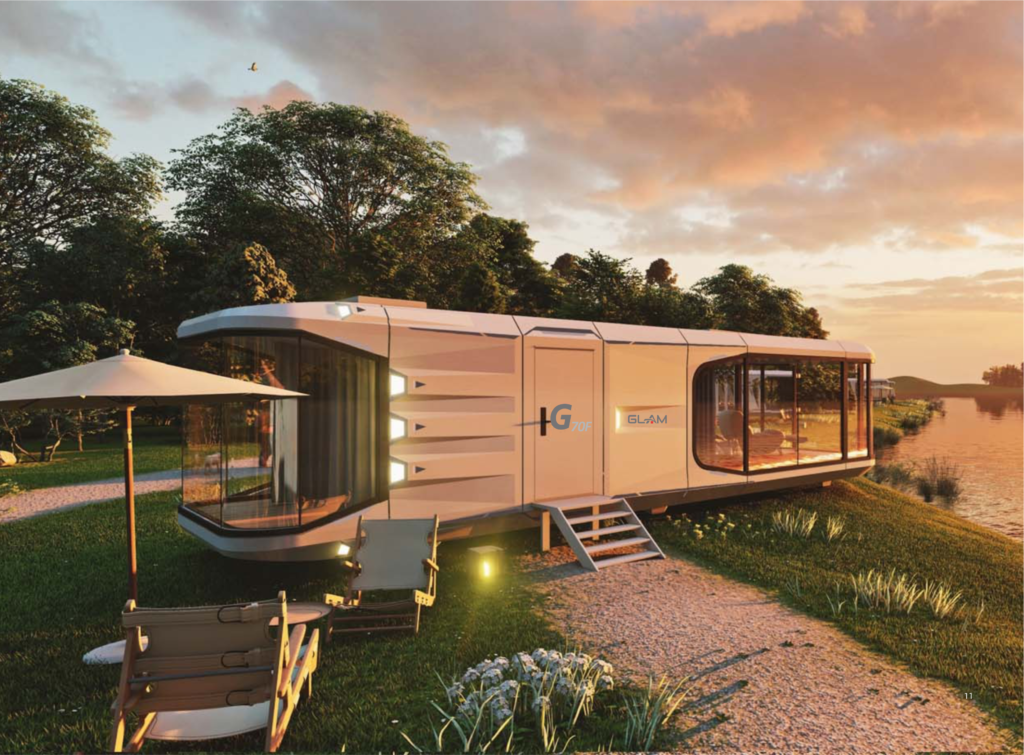
Finally, when everything is connected, the electrician checks everything. So, the electrician noticed that all the wires and switches are correct and secure. In short, electrical fittings make electricity in your modular home safe and easy.
2) Core components you should expect
As you have learned about the definitions and scope of electrical fitting in modular houses. Now, you will learn about the main parts that make up an electrical system in a modular home. These are the key things that help your home get safe and steady power every day.
i) Shore or Utility Inlet
First of all, there is a power inlet. It is the place where electricity enters your home from the main line or power source. Also, this inlet has a lockable switch to keep it safe. The cable entry is sealed. Therefore, dust and water cannot get inside.
ii) Main Distribution Board (DB)
Next, electricity goes to the main distribution board. Amazingly, it works like a heart that sends power to all parts of your home. Inside the board, there are breakers that protect each circuit.
Additionally, every breaker has a label to show which part of the house it controls, like lights, plugs, or air conditioner. Also, there are RCBOs, or GFCIs, RCDs devices which protect you from electric shocks. The board also has spare space for future needs, so you can add new circuits later.
iii) Earthing and Bonding System
Then, comes the earthing system. This system helps extra electricity go safely into the ground instead of harming people or devices. There is an earth bar that connects all earthing wires together. Also, bonding points are kept in open areas so electricians can check them easily.
iv) Wiring System
Additionally, Copper is strong and carries electricity well. Therefore, all the wires inside the home are made of copper. The wire sizes are chosen carefully based on how much load or power each circuit needs.
Wires run through pipe (plastic or metal tubes) to stay safe from cuts or heat.
Also,eEvery junction box and wire is labeled clearly. Therefore, it is easy to find and fix if needed.
v) Endpoints (Switches, Sockets, and Lights)
Next, there are endpoints where you use electricity. For example, switches, sockets, and lights. Additionally, outdoor sockets and lights have a special IP rating, which means they are safe from rain and dust. This makes them perfect for use outside, like on patios or garden walls.
vi) Surge and Overvoltage Protection
Finally, modular houses also have surge protection devices (SPD). Honestly, this protects your home from sudden high voltage or lightning strikes. Moreover, they are usually installed near the main power board or key sub-panels. Because of these devices, your home stays safe, and your electronics last longer.

3) Spec choices by scenario
As you have learned about the main parts that make up an electrical system in a modular home. Moreover, every modular home needs the right electrical setup based on where it is used. Not all countries or places use the same power type. so, it’s important to match your home’s system to your region.
i) Voltage and Plug System
First of all, different countries use different voltages. Moreover, some places use 230 volts and 50 hertz (like most of Asia and Europe). On the other hand , others use 120 volts and 60 hertz (like the United States and Canada).
So, your modular home must be made to match the voltage and plug type of your area. This helps your lights and devices work safely.
ii) Circuit Sizing for Lights and Sockets
Next, every modular house has different circuits for lights, fans, and sockets. Moreover, lighting circuits use smaller wires because they carry less power. Socket circuits need thicker wires since they power heavy things like fridges or washing machines.
Each circuit is planned carefully to avoid overheating and to make sure power flows smoothly.
iii) Outdoor and Damp Area Protection
Then, outdoor areas like gardens, balconies, and bathrooms need extra care. So, electricity and water don’t mix. For example they use RCDs or GFCIs to stop shocks if water touches electricity.
Also, switches and outlets here are placed inside special waterproof boxes called IP enclosures. For example, an IP65 box can stop water and dust from getting inside.
iv) Solar and Backup Power Options
Additionally, modern modular homes can be ready for solar panels, inverters, and batteries. This means you can store sunlight energy and use it at night or during power cuts.
There can also be generator input and automatic transfer switch (ATS) systems. Moreover, these help your home switch power safely from solar or generator when the main power fails.
v) Planning for Future Needs
Finally, your modular home’s wiring should be future-ready. This means having extra space in your main board and extra wiring points for adding new devices later. So, if you buy a new air conditioner, heater, or electric car charger, you can connect it easily without big changes.
4) Safety and compliance essentials
As you have learned about the main parts that make up an electrical system in a modular home. Now you will learn about the safety and compliances essential for modular houses.
i) Personal Protection
First of all, every modular home should have RCDs, RCBOs, or GFCIs. These are safety devices that protect you from electric shocks. If electricity flows the wrong way or touches water, these devices cut off the power immediately. So, they help save lives and prevent accidents, especially in bathrooms and kitchens.
ii) Equipment Protection
Next, your home needs Surge Protection Devices (SPD). Moreover, these devices protect your machines, TVs, computers, and lights from high voltage or lightning strikes. The wires connected to the SPD are kept short and direct, which helps it work fast. Also, most SPDs have light indicators that show if they are working properly.
iii) Environmental Protection
Then, you must protect your electrical parts from dust, rain, and heat. That’s why modular homes use strong enclosures with special ratings. For example, an IP65 enclosure is safe for outdoor use. So, it keeps water and dust out. Hence, this is very useful for garden lights, outdoor sockets, and rooftop solar systems.
iv) Verification and Handover
Additionally, when all electrical work is done, everything must be checked carefully.
Electricians test the wires, breakers, and switches to make sure everything is safe and working right.
Also, they prepare a single-line diagram (SLD) that shows how power flows through the house. Besides this, they give a load schedule that lists how much power each part uses. Finally, they hand over test records to prove that all safety checks are complete.
v) Following Local Standards
Lastly, every modular home must follow the electrical codes of the country where it’s installed. Moreover, these codes are made to protect people and property from electrical danger. When your home meets these rules, you can trust that the system is safe, strong, and legal.
5) Buyer checklist before ordering
As you have learned about the safety and compliances essential for modular houses. Now you will learn about the buyers checklist before ordering.
- Rated Inlet and Lockable Isolator: Firstly, every modular home must have a safe power inlet and a lockable isolator. Moreover, the inlet is the main entry point for electricity, and the isolator allows you to turn off power safely during maintenance. Hence, this prevents electric shocks and keeps you safe when fixing or cleaning.
- Distribution Board and Breaker:Next, the main distribution board (DB) controls all electrical circuits in your home. Also, it has breakers, RCDs, or RCBOs that protect you from overloads and electric shocks.
Each circuit is clearly labeled for easy use. So, you can quickly find and switch off any faulty circuit, keeping your home safe from short circuits or fires.
- Earthing and Bonding System: Then, proper earthing and bonding are must-haves in every modular home. Moreover, they guide extra electricity safely into the ground and connect all metal parts to the same potential. This keeps people safe from electric shocks and prevents damage to electrical devices.
- Cable and Conduit Details: Additionally, the quality and size of cables and conduits matter for a safe electrical system. Therefore, copper wires carry current smoothly and are placed inside conduits that protect them from heat and cuts.
As a result, strong wiring lowers the risk of fire and keeps your system running for years without trouble.
- Outdoor Fixtures and Surge Protection: Besides, outdoor lights and sockets need extra protection from water and dust. IP65-rated fixtures and Surge Protection Devices (SPDs) keep your home safe from rain, dust, and voltage spikes. Thus, your outdoor fittings last longer, and your electronics stay safe even during storms or power surges.
- Handover Pack and Documents: Finally, always ask for a handover pack when receiving your modular home. So, it includes the Single-Line Diagram (SLD), load schedule, and test reports showing your system has passed safety checks. Hence, these documents help you prove your house is safe, easy to maintain, and ready for future upgrades.
Conclusion
In short, electrical fittings are very important. Moreover, this keeps your modular home bright, safe, and comfortable every day. A well-wired home means fewer problems and more peace of mind.
Before buying a modular home, make sure its electrical system is complete, safe, and future-ready. So, here at Glamni we provide homes with fully safe, code-compliant electrical systems. So, contact us today and start your journey.