Skip to content


Can a tiny capsule house stay warm in winter? Of course! It can! It sounds surprising, right? With smart planning, you can make it cozy and safe. In this guide, you will learn how to check temperature, snow, and wind.
Also, you will learn how to seal gaps, add insulation, protect pipes, upgrade windows, and get ready for snow or power outages. So keep reading!

1) Plan your cold-climate setup
In this section, you will learn how to prepare your capsule house for cold weather. Also, you will check the temperature, snow, and wind conditions. So, you can decide how to use the house, set comfort targets, estimate energy needs, plan your budget, and prepare for emergencies.
- Know your local weather: Firstly, it is important to understand your local weather to winterize your capsule house. Therefore, you should check the lowest average temperature in your area. Thus, this tells you how much insulation and heating power your home needs.
- Check the snow load: Secondly, check the snow load. This means how much snow your roof can hold without breaking. Moreover, knowing this helps you decide if your roof structure needs extra strength or a steeper slope. Hence, a stronger roof design prevents bending and leaks during heavy snowfalls.
- Check wind exposure: Next, check the wind exposure of your site. If your capsule house sits on open land or a hill, cold winds can pull heat out faster. In such areas, airtight sealing and wind barriers become very important.
- Decide usage type: Then, you should decide how you plan to use your capsule house full-time or part-time. So, full-time homes need continuous heating and ventilation systems. On the other hand, Part-time setups can use lighter systems but must still prevent pipes and interiors from freezing when unoccupied.
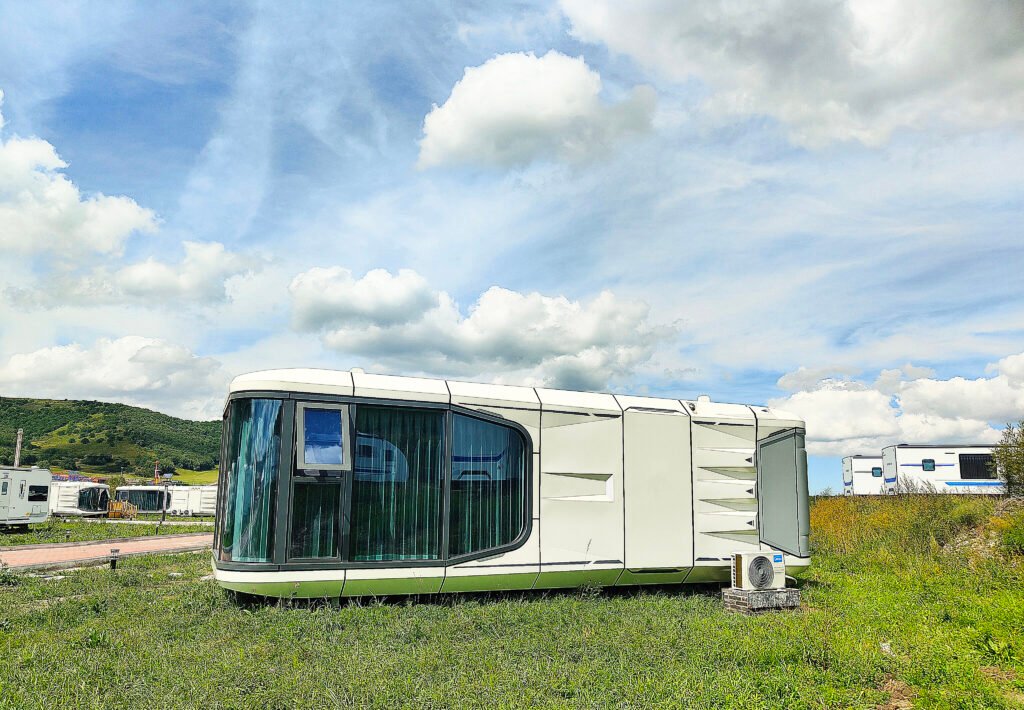
- Set comfort targets: Also, you should set your comfort targets early. Therefore, you can keep indoor temperature around 18–22°C (64–72°F) and humidity between 30–45%. As a result, this balance keeps the space warm, prevents condensation, and avoids mold growth.
- Estimate energy needs: Additionally, you should estimate your energy needs based on your climate, home size, and target temperature. Moreover, this will help you choose the right heating system and insulation thickness. Hence, proper planning saves energy and lowers running costs all winter.
- Plan your budget: Furthermore, plan your budget carefully. For example, for insulation, windows, skirting, plumbing protection, and backup power systems. Thus, having a clear budget ensures you do not miss any critical upgrades.
- Use site orientation wisely: Besides that, consider your site orientation. Moreover, south-facing windows can bring in sunlight and natural warmth during the day. Meanwhile, nearby trees or fences can act as windbreaks, protecting your home from cold blows.
- Follow local codes: Also, do not forget local building codes and permits. Moreover, some regions have rules for snow load, insulation, or electrical systems in mobile or modular units. Following these will help you stay compliant and safe.
- Prepare an emergency plan: Finally, make an emergency plan. Moreover, you should make a list of what you will do if power goes out, a storm hits, or pipes freeze. Keep essentials like a small generator, blankets, and a first-aid kit handy.
To stay organized, create a checklist:
What to Check | Why It Matters |
Design temperature | Helps you choose insulation & heating |
Snow load | Keeps the roof safe in heavy snow |
Wind exposure | Prevents heat loss |
Usage type | Determines heating needs |
Indoor targets | Keeps comfort & avoids mold |
Energy needs | Helps plan your heating system |
Budget | Ensures you don’t miss upgrades |
Site orientation | Maximizes sun & blocks cold wind |
Permits | Keeps your setup legal & safe |
Emergency plan | Prepares you for storms & outages |
This first step builds the foundation for every other part of your winter setup. Once your plan is ready, you can move confidently to sealing and insulating your capsule home.
2) Seal and insulate the shell
As you have learned about planning your cold-climate setup helps you understand what your capsule house needs to stay warm. Now, you will learn how to seal and insulate the shell to keep heat inside and cold air out.
- Air-seal all gaps: Firstly, stop cold air from getting inside your house. Even tiny holes let heat escape. So, you look at all the small holes near pipes, wires, doors, windows, and vents. Thus, this keeps your house warm and saves energy.
- Focus on roof and floor insulation: Next, keep your roof and floor warm by adding insulation. Moreover, heat can easily leave through the roof and floor in small houses. so, use thick insulation materials. Hence, your home stays cozy, and you spend less on heating.
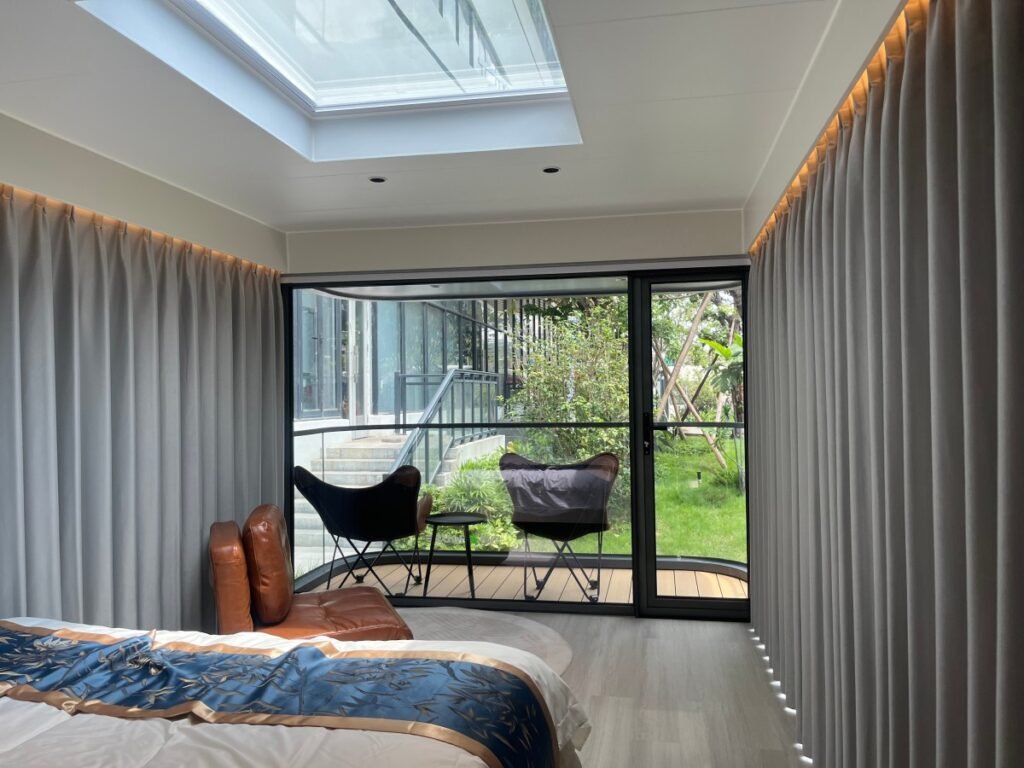
- Check seams and service areas: Finally, make sure all sides and corners are sealed. Also, you should look around equipment areas and service openings to stop cold air from coming in. As a result, your heating works better, and there are no cold spots in your house.
3) Add insulated skirting and underfloor protection
As you have learned about sealing and insulating your capsule house keeps it warm. Now, you will learn how to protect the space under your house.
To block cold air add a barrier around the bottom of your house. around the frame Use a rigid, insulated panel . Also, leave an access panel and drainage path to check pipes and water easily. Additionally, make sure all edges are closed and sealed.
Cold air and small animals can come in through gaps under the house. Sealing edges keeps your home warm and safe from pests. Moreover, you can protect pipes and plumbing from freezing.
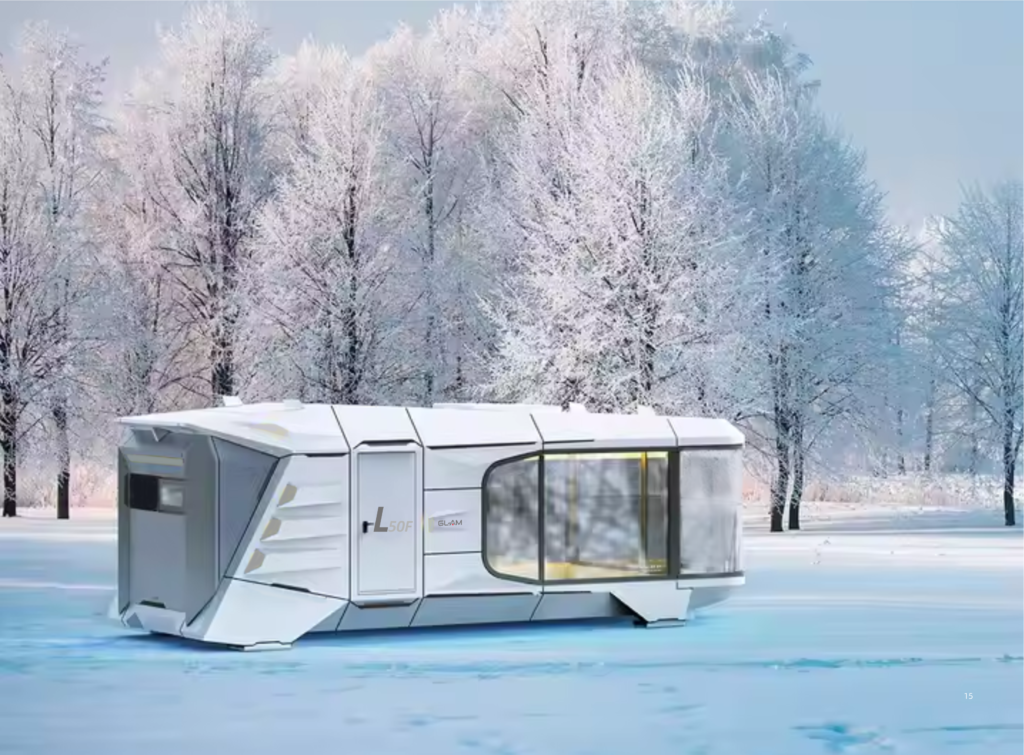
The bottom cover and underfloor insulation stop water lines from getting icy in winter. Thus, this prevents frozen pipes and keeps your house comfortable.
4) Protect plumbing from freezing
As you have learned, adding a bottom cover keeps your house warmer. Now, you will learn how to protect your water pipes and plumbing in winter.
Even small pipes can freeze if not protected. Therefore, you should wrap all exposed water pipes and valves with heat tape or insulation. Moreover, when the pipes and valves are cold this insulation keeps them warm.
If water flows outside, use a special heated hose. It stops the water from freezing. Moreover, this stops water in outdoor pipes insulation from freezing. Thus, you can still get water safely even in freezing weather.
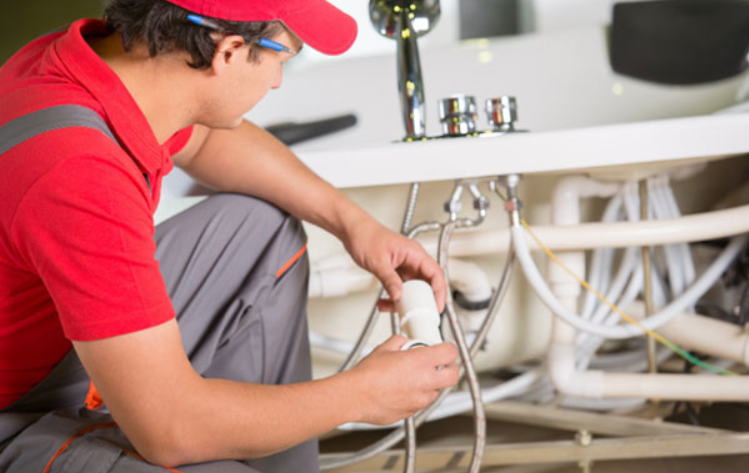
If you leave your house empty for a while, shut off the water, drain the lines, and add RV antifreeze to traps. This prevents frozen pipes and water damage. As a result, it keeps your plumbing safe all winter.
5) Upgrade windows and control moisture
As you have learned, protecting your pipes keeps water safe in winter. Now, you will learn how to keep your windows warm and control moisture inside your capsule house.
Use double-glass windows or low-emissivity (low-E) windows, and add weather-stripping around frames. Moreover, this stops cold air from coming in and warm air from escaping. Windows with thermal curtains help more.Run a small bathroom fan on a timer, or use a heat-recovery ventilator (HRV) if possible.
This removes excess moisture from cooking, showers, and wet clothes. So, always follow simple daily habits. For example, keep lids on pots when cooking and dry wet clothes or gear before bringing them inside. Hence, this prevents dampness and mold.
6) Choose heat that works below zero
As you have learned, keeping windows warm and controlling moisture makes your home cozy. Now, you will learn how to pick the right heating system that works even in very cold weather.
You can choose a mini-split or heating system that can work in freezing temperatures. Moreover, some heaters stop working when it is too cold, so check the product specifications carefully.
Also, add small radiant panels or space heaters in rooms that need extra warmth. Thus, it gives a comfortable temperature in every corner of your house. Also, you should test CO and smoke alarms, and place leak or freeze sensors near pipes.
Moreover, this keeps you safe while heating your home efficiently.Choosing the right heat system keeps your capsule house warm, safe, and comfortable even when it’s very cold outside.
Heating Type | Works Below 0 °C? | Pros | Cons |
Mini-split | Yes | Efficient, quiet | Costly |
Radiant panel | Yes | Fast warmth | Small coverage |
Space heater | Limited | Easy to move | Energy use |
7) Roof, snow, and outage readiness
As you have learned, choosing the right heating system keeps your home warm and safe.
Now, you will learn how to take care of your roof, handle snow, and be ready for power outages.
- Inspect your roof: Firstly, a strong roof prevents leaks and damage when snow piles up. Moreover, you should check your roof before winter storms. Therefore, you should look at roof fasteners, seals, and panels to make sure nothing is loose or damaged. This keeps your home dry and safe during winter.
- Plan snow removal: Then, be ready to remove snow safely. Moreover, use a shovel, roof rake, or hire help to prevent heavy snow from building up and causing ice dams. Thus, removing snow prevents roof damage and dangerous ice problems.

- Prepare for outages: Finally, be ready if the power goes out. Therefore it is important to have a surge protection device, a small generator, or battery backup. Moreover, it keeps essentials like blankets, flashlights, and a first-aid kit handy. As a result, this keeps your home safe and comfortable even during storms or power failures.
Conclusion
In short, winterizing your capsule house keeps it warm and safe. Moreover, seal gaps, add insulation, and protect pipes. Upgrade windows and prepare for snow and power outages. Therefore, by following these steps, you can save energy, prevent damage, and enjoy a cozy, worry-free winter.
We at Glamni make capsule houses built for cold climates. So, contact us today to learn more and keep your home comfortable all winter.