Skip to content


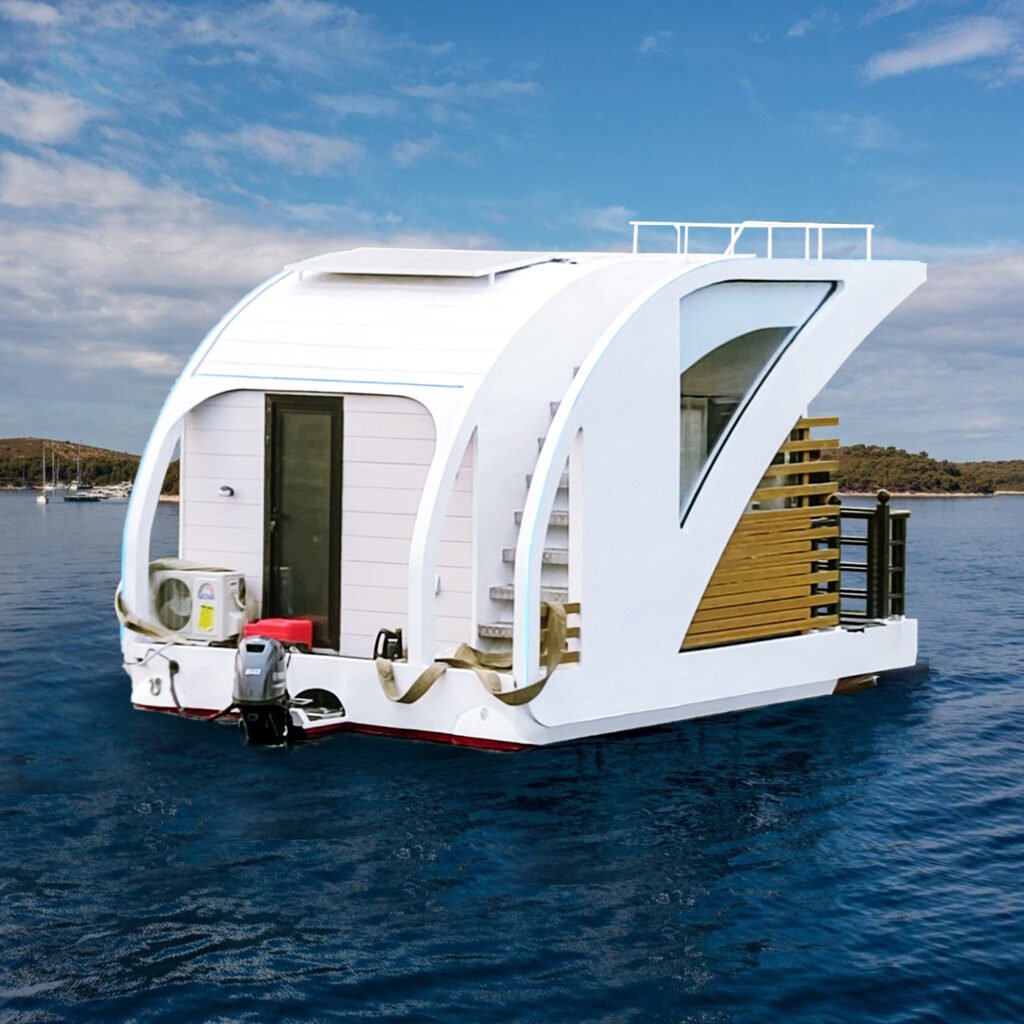
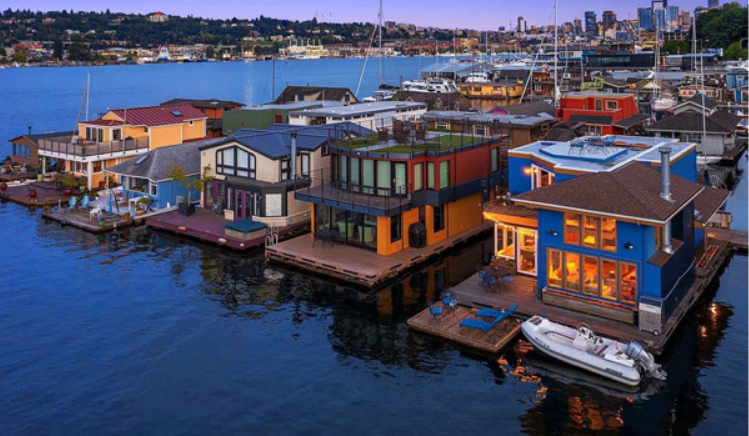
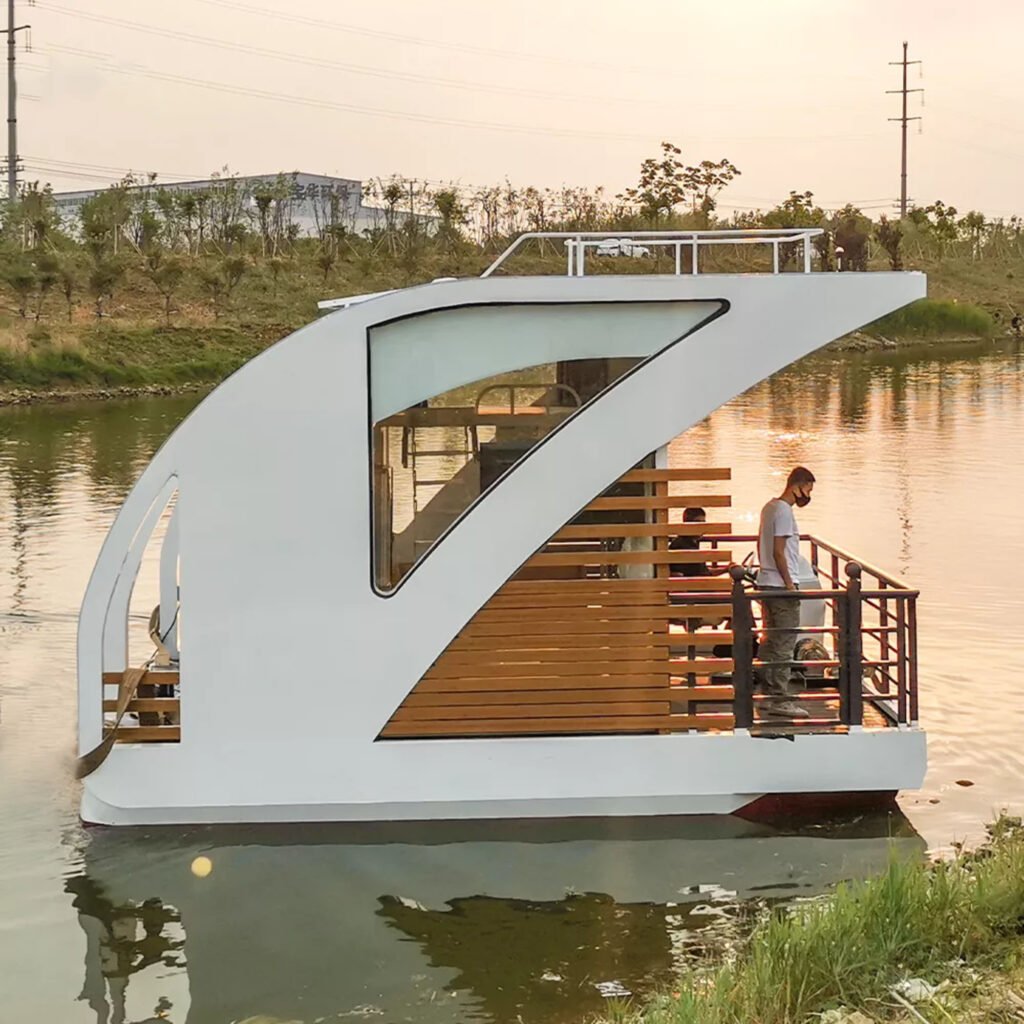
We all know floating homes means homes that are built on water. Unlike a houseboat, a floating home has no engine and does not sail away. Still, people living in these homes enjoy all the waterfront views a houseboat gives. And honestly, the safety question crossed everyone’s mind at least once.
Floating homes are safe to live as long as they’re made and anchored well, have the right security, fire and electrical systems and are maintained with routine checks.
This article explains why and what makes floating homes a safe option.

1. How mooring and floats protect your floating home
“Floating homes move. Homes may be moved by strong winds… until they reach the end of the mooring lines.”
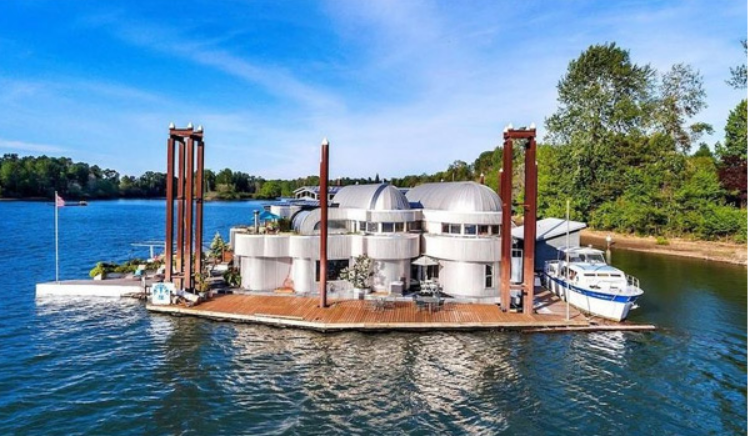
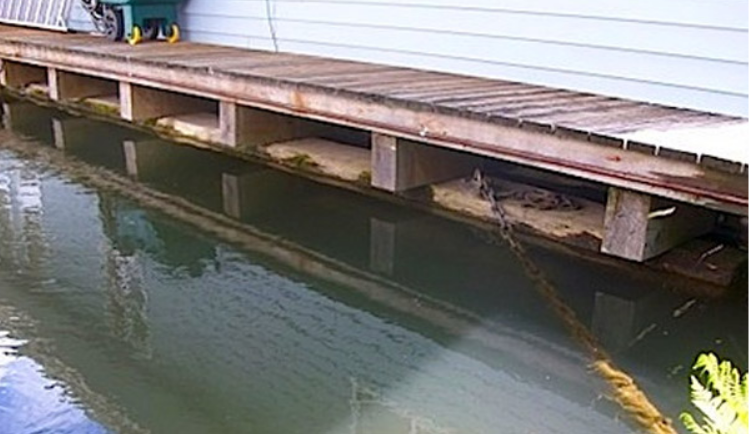
➜ That’s why floating homes use a special type of mooring who provides the core holding capacity in storms. A common method is a “pile-guided mooring”. It’s like: workers add vertical pipes (piles) into the lake or riverbed. Then, this home has sliding collars that fit around each pile. These collars allow the house to rise and fall freely with tides or floods. At the same time, the piles keep your floating home from drifting sideways. Thus, the result is core stability: the house stays roughly over its dock.
Moreover, owners use strong ropes or cables that are tied to fixed points. They mostly use two or more lines on each side. This redundancy means that if one line fails others still hold the floating home.
Asce Standard: 60-knot wind and 100-year storm load for permanent moorings.
The best floating homes builders always size the mooring system for nature’s extreme forces. Codes and guidelines for floating structures say to use “high safety margins” like 100 year storm conditions.
➜ Also floats (the house platforms) use to protect these home. Because floats keep the building buoyant and dry. Modern floats are normally made of concrete, steel or foam. These materials resist water damage.
For example: concrete barges contain steel rebar. Newer bars have epoxy-coated rebar to prevent rust. Moreover, proper concrete strength (about 4000 PSI) and coated metal can last for decades on water. Lastly, foam-filled steel pontoons or poured concrete have large buoyancy to hold the house high.
➜ You may know that freeboard is the name for the extra height above the water. Standard rules are mostly to have at least a foot of freeboard (sometimes more) above the waterline. This makes sure the deck stays dry even in waves. In comparison, old plywood floats are unsafe today. Because wood decays in water and fails suddenly. Thus, the float stays corrosion-resistant and keeps the home level on water by using concrete or foam floats and maintaining the hull coating.
The changes of water level are also considered. Some rivers and lakes can rise or fall many feet. Also, some can go extremely low, so the areas of the riverbed where the floats sit may be dredged or flotation altered. That’s why floats must be sized and freeboard set for local high and low water.
Thus, this means mooring systems should be matched to local winds, waves, and currents with safety factors built in.
2. Fire and Electrical Safety on Water
Fire and electrocution are top major hazards in floating homes. Floating homes use many of the same protections as land homes… but in a marine setting.
➜ For electrical safety on all floating homes, Shore-power protection (Emergency Limit Current Device) is a must thing. Each home’s electrical panel must connect to a shore cable at the dock. Codes (like NEC Article 555 in the U.S.) require “ground-fault protection at every pedestal”. This means GFCI or RCD devices that trip at low leakage currents (30 mA or less) to shut off power if a wire contacts with water or someone.
Internally, wiring must be marine-rated. Also, outlets near water require drip-proof covers. Marinized breakers and cables are used to prevent corrosion.
➜ Fire safety on floating homes has some extra safety steps.
- The first is building materials: use fire-resistant linings. Because metal studs, cement board panels or fire-rated drywall can slow fire more than non-treated wood. Also, add smoke barriers (like non-combustible walls around stairs) to get extra escape time. And make the floor plan compartmentalized: a hallway or separation wall can block smoke and flame. And
- The next is: Alarms and extinguishers are mandatory. Like installing smoke detectors in sleeping areas and living rooms or carbon monoxide alarms near bedrooms(if any fuel heating is used). Also, add a fire extinguisher (or two) on every level, specially near the kitchen or any heater. These should be class ABC and serviced yearly.
- The third step is evacuation planning. Many of you know that floating homes have only the water or dock to escape. You must know the marina’s fire plan and have a fresh water pump or hoses on hand. Also, use ladders from the deck during daylight. And install emergency lighting along the walkway at night so you can see the path to safety. Many communities also require illuminated exit signs or glow strips on docks.
- The final step is: Do heating and cooking with great care. This is good to use shore gas or electric stove rather than open flames. If you are using gas or propane then install proper vents and check for leaks with detectors. Because a properly ventilated home avoids carbon monoxide from building up at cooking or heating time.
These steps help owners to evacuate quickly. Also these steps slow fire spread and buy time to exit safely.
3. Security features in a floating home
Floating homes face similar security issues as any house.
➜ For this purpose, use marine-grade lock systems plus waterproof and corrosion-resistant hardware(hinges) on all exterior doors. These are typically 316 stainless steel and corrosion-resistant. Also, these cannot be unscrewed easily due to locking pins.
➜ Windows should be “double-glazed laminated” to offer both safety and comfort. As laminated safety glass can crack but remain in the frame. This makes break-in much harder than ordinary glass. Also double glazing reduces heat loss and noise and the inner laminated layer resists shattering. That’s why many floating home builders use the same quality glass as boats or RVs (which must meet CPSC or ASCE standards).
➜ The good dock lighting and controlled access reduce trespass. Because docks and walkways are common points of entry. Also, many marinas use coded gates or keycards for entry. To add an extra layer of security, use closed circuit cameras or patrols.
The tips are: lock all gates, even upstairs windows. Plus remove spare keys and lock all vents. You can also install alarm systems connected to phone alerts. The most important is to avoid advertising when you are away (daily lights off etc).
4. Water, waste and environmental safety
Living on water demands protecting the water itself. Different countries have different laws for this.
• Drinking water:
Municipal water is usually piped to docks. Also need to add a backflow preventer on the shore connection to stop any contaminated water from flowing back into the city line. And a simple filter or UV purifier (and occasional chlorination)inside the home, keeps water supply clean.
• Sewage and greywater:
Greywater (sink and shower water) and sewage needs more attention than a land home. Almost all countries’ marinas forbid raw discharge. Normally, greywater drains go right into the water (passing through a strainer). Some sensitive marinas even ban greywater. Floating homes use holding tanks with macerators for sewage. These holding tanks get emptied at approved pump-out stations on land or on safe places.
A macerating “honey-pot” grinds the waste and pumps it ashore through a hose.
Modern systems use 30–50 gallon tanks and protect the main sewer by splitting. All floating houses have their own pump and connect to a centralized tank. Also, hoses and pumps are inspected periodically to make sure they are working properly.
• Emergency shut offs:
Emergency shut-offs and sensors round out environmental safety. Isolation valves are usually installed on main lines (water, fuel, sewage). If anything leaks, these valves allow you to turn off immediately. Also consider adding sump pumps and bilge with float switches or alarms. If ever the home starts taking on water (from rain or a leak), these alarms will ring out. Also, many owners prefer to add moisture sensors in the bilge and beneath sinks.
Overall, keeping your home’s utilities properly piped (with flexible tubing) and monitored stops water pollution.
5. Comfort and health in a marine climate
Good insulation and finishes make your floating home cozy.
- First, insulate the roof, walls and floor as well as a land home. For this, use closed-cell spray foam or rigid foam insulation against the hull and decks. Also, put a thermal break between the hull and interior framing (plastic or foam blocks) to avoid thermal bridging. These make indoor temps stable and prevent cold spots.
- Second, control humidity. Mechanical ventilation systems or a dehumidifier control condensation and stop molding. Opening windows daily (if safe) also helps. Also, insulated double-glazed windows reduce condensation.
- Last, plan for HVAC and vibration damping. Many floating homes come with pre-installed ductwork for AC and heating(HVAC). Also, consider mounting equipment on rubber isolators to avoid vibration transfer. For example: a mini-split compressor on the roof can be put on anti-vibration pads. Also, ceiling fans and a heat recovery ventilator (HRV) can help to distribute air without consuming more power.
6. Compliance, insurance and maintenance
Floating homes are permanent structures by law. They must follow building and zoning rules just like any houses on land.
By law “floating homes are non-navigable structures, permanently moored… subject to local building and zoning codes”.
So, you need to obtain building permits (or a special waterfront permit) before construction or relocation. Many countries have specialized standards. For example: British Columbia (Canada) has a “Float Home Standard” that requires annual inspections of floats, moorings and utilities. It is wise to verify rules early. Must check for local city or county guidelines (sometimes older “grandfathered” floats have different rules).
A good checklist: confirm the lot lease, survey the float by a marine engineer and see that fire and waste hookups meet regulations..
Another topic is insurance. Mostly regular home policies don’t cover a floating house fully. Thus, owners need a floating home insurance policy. Don’t assume your policy floats with you.
As such policies cover the house structure and contents but normally exclude “flood” or “act of God” events by default.That’s why you should ask about insurance coverage for storms, earthquakes and liability (slip liability to a neighbor’s boat etc).
Maintenance on water needs a perfect schedule to make sure safety, performance and longevity. This should cover the regular inspections of mooring lines, hardware, floats or bilge conditions. Test the electrical systems routinely and check for any fuel or plumbing leaks. Also, keep an eye on the condition of locks, docks and floats.
Moreover, perform monthly inspections of safety equipment (alarms and fire extinguishers). Also, water treatment systems (drinking water clarity, taste and backflow preventers) must be tested regularly. The final one is ventilation systems (HVAC filters, vents and dehumidifiers) that must be cleaned or replaced as needed.
Record everything in a log and take pictures of every checking schedule. When you catch issues early this keeps your floating home safe and avoids costly repairs later.
7. Conclusion
Floating homes can be safe if they are built and maintained correctly. As you read, strong pile-mooring systems and durable floats keep your home safe in storms. Also, proper electrical bonding and GFCI protection end the chance of shock hazards.
And most importantly, do not skip checking for local rules and buy special floating home insurance. Moreover, add secure locks, laminated windows, proper waste systems plus insulation and boom: living on water feels just as safe and comfy as life on land.
If you want more tips, consult your local floating home association or connect with the Glamni team. Their guidance can make your floating home buying and living safe, chill and totally low-stress.