Skip to content


When a space capsule house arrives on site, delivery is only the first step. You still need to prepare the capsule house before you can use it safely.
Many people think the house is ready right after placement. But, in reality, many on-site tasks decide how well the capsule house performs and lasts. Also, these make the house comfortable and ready for living or business use.
In this article, you will read what to do next, from unloading to final checks.

Unloading and positioning the capsule house
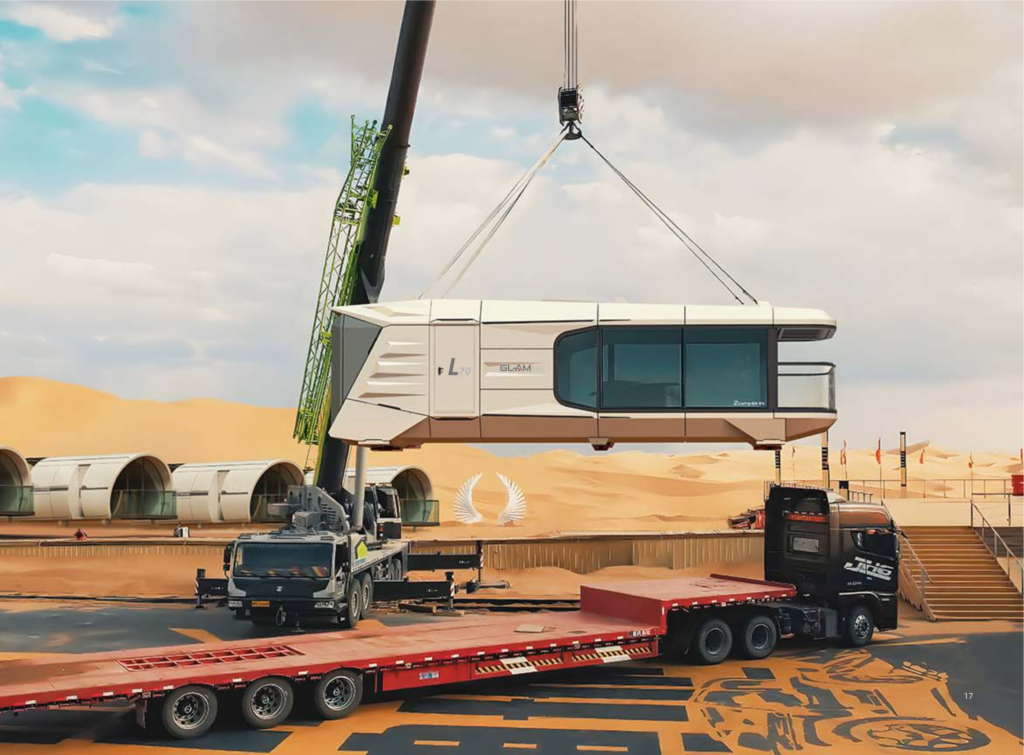
You have to unload the capsule house carefully. You need to attach slings to its built-in lifting lugs on the frame. Check the capsule’s weight and needed lift height. If it is heavy or must go high, then plan to use a crane. If the house is lighter and you have clear drive up access, then a telehandler (large forklift) is good to go. But make sure the landing area is clear and firm. You need to wear a hard hat and clear the area. You also need to secure any loose items inside the capsule house before lifting, so they don’t shift. And use steel plates under the crane or forklift if the ground is soft. Moreover, lock the forklift’s wheels and lower the crane’s outriggers for stability. You also have to watch for any overhead power lines or obstacles when lifting the capsule house.
“Never stand under the capsule while it is lifted.”
When unloading, move the capsule partly out before lifting. For example, you can slowly pull the capsule until 20% is out, then place the forklift under a strong point to bear the load. And continue pulling until 70% is out, then use the crane to pick up and place the rest on the site. This step by step method prevents damage and keeps the unit like new.
After unloading, you need to position the unit on the foundation. You have to follow the site plan. Use a laser level or GPS to place it precisely. Double check that the capsule matches the plan and legal setbacks on the property. Also, measure corners and sides to avoid misalignment.

Foundation alignment and fixing checks
Once in place, you have to check the foundation alignment. You can use a level to verify that “the floor is even at all four corners.” Because land sometimes slopes, capsule houses allow minor adjustments on site. For example, many foundations use screw piles or piers with adjustable heads. You need to crank these jacks or turn nuts until each corner is level and flat. If one corner is high, adjust it down. If the base is not flat, your doors may not close and walls can warp. So, you must have to fix this now.
Moreover, you have to check each support point. Every pier or pad should touch the capsule’s base firmly. Look for gaps between the module and its foundation. If you find any, tighten the support or insert a steel shim. Use a long level or straightedge across the floor to check for sags. If the module spans piers or blocks, adjust each one. These fixes actually prevent stress on the frame and doors.
After that, verify anchors and fixings. Bolt or weld the capsule to the foundation as specified. Tighten all anchor nuts and check washers. This honestly secures the capsule house against wind and earthquakes. You also have to make sure the soil slopes away from the foundation. In this case, add soil or gravel to direct water away. Also, check for any termite or pest barriers at the foundation.

Connecting water, power and drainage systems
Next you have to hook up utilities. Your capsule house needs water, power and drainage. First, connect the water. For this, you have to attach the incoming water pipe to the house inlet and install a shut off valve. Also, you may have to add a pressure regulator on the line. Now run the pipes to all sinks, toilets and showers inside. Must insulate any exposed lines if you live in a cold climate. After all that, install the water heater and test it.
Then connect the drainage. Attach waste pipes from kitchen and bathroom to the local sewer or septic tank. And install a vent pipe if required. You have to seal all joints to prevent leaks. You need to make sure all drains slope down for proper flow.
Now hook up electricity. You need to connect the main power cable to the capsule’s electrical panel. Install circuit breakers. Do wiring to all lights and outlets. You can label every breaker in panel for clarity. Please make sure that the panel is grounded. If you have solar panels, mount them and connect the inverter. But if you use a generator then follow safe hookup procedures. Lastly, turn on the main power. Test each circuit and system. Also, open taps, flush toilets and flip switches to make sure everything is working.
Exterior sealing and on-site adjustments
The next step is to protect the house against the weather. First, remove any shipping braces or protective films from the exterior. Now it’s time to inspect all joints and seams after transport. And look for any gaps or open caulk lines specially where panels meet. You have to seal gaps with caulk or weatherproof tape to prevent leaks. Moreover, cover any utility or cable entry holes. Even small openings can let water in. So seal them well.
Next, check doors and windows. Open and close each door to ensure it fits the frame. You need to check weather stripping and locks. Replace or tighten if any hardware is loose. And make sure window latches work properly. This keeps wind and rain out.
Now, look at the roof and edges. First check roof panels, flashing or any roof bolts. You have to tighten or replace if anything is loose. If your house has an overhang or gutter system then attach gutters and downspouts(as needed). Also, clear any debris or leaves from the roof or near or around the house. Also, you may want to install an exterior light or house number if needed.
Lastly, do some on-site adjustments according to your local climate. Like, in very sunny areas, you may want to add an awning or sunshade. In cold climates, you have to make sure vents and insulation are in place. In hurricane zones, you need to secure or brace the house. Also, secure your outdoor fixtures or furniture. These some tweaks help your capsule house handle the local climate comfortably.

Final inspection before use or handover
Finally, you have to inspect everything inside. You need to turn on all lights and appliances to check they work. Next, you need to run water in all sinks and showers. Also, flush toilets to confirm plumbing. You have to test any installed smoke detectors. If something fails, you need to fix it immediately.
Then you will clean the house. Like, removing all packing materials, tools and debris. You will have to wipe down surfaces and sweep the floors. And remove any of the remaining stickers or plastic film.
Check that all doors and windows lock properly and keep the keys. “Note the initial meter readings for water and power.” Do a final walk-through to ensure the capsule house meets your needs. You can also briefly test the heating or AC system if installed.
The capsule house is now ready for occupancy or handover.
Conclusion
You have learned what to do after your capsule house arrives. You have read how to unload and place it correctly. Also how to check the foundation and anchor the house. Plus, how to seal the exterior test all systems. Understanding these steps helps you avoid mistakes and enjoy your capsule home safely.
If you want a high quality capsule house, consider Galmni’s capsule houses. With the right partner, you can start your project and relax.