Skip to content


Space capsule houses are becoming increasingly popular in modern housing and hospitality. Their futuristic design is catching the eye of buyers. However, they are not suitable for every project. Several hidden challenges affect cost, planning, and long-term use. Accurate information is essential before investing.
What are the real limitations of space capsule homes? This guide helps you understand the key drawbacks so you can make an informed and accurate decision.
1) Transportation and Access Limits
The biggest problem with space capsule houses is transportation. These units are large in size and heavy in weight. You can’t easily move them through narrow city streets or rural roads. Many locations have road widths, bridge weight limits, or sharp turns. All of these things limit the access of large trucks. This requires you to obtain special permits.
Well, this adds time and paperwork to the process. In some areas, deliveries are not allowed at all. Access to the site can also be an issue. Uneven ground, soft soil, or limited access roads make installation difficult. You have to prepare the site in advance, which increases the initial cost.
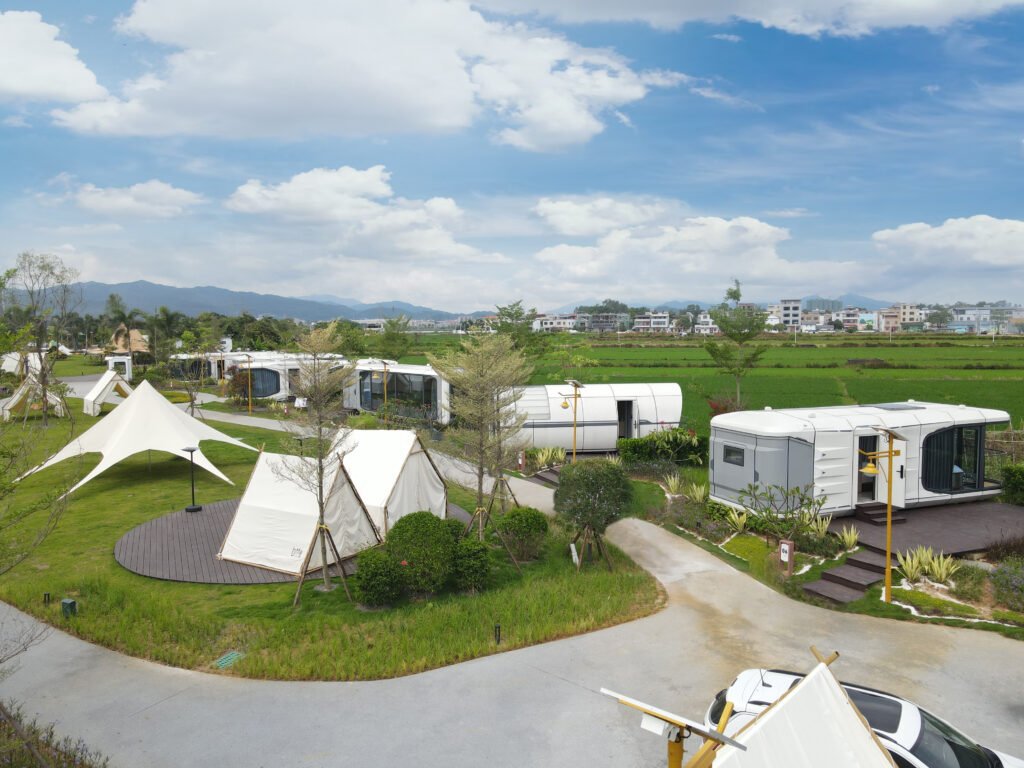
Also, the installation process is completely crane-dependent. You can’t install a capsule house by hand. A large crane is required to unload and place the unit in the correct location. Renting a crane is expensive. Experienced operators are also required. If the crane can’t reach the site, installation will not be possible.
Moreover, bad weather can also cause delays. Strong winds and rain can disrupt work. This complicates planning. Any mistakes add to the additional costs. These problems are even more acute in remote or mountainous areas. Sloping paths hinder heavy vehicles. Bad roads slow down deliveries. Fuel and labor costs increase. In most cases, such locations are not practical for space capsule houses.
2) Regulatory and Approval Barriers
After transportation and site access issues, you face regulatory hurdles. Even if the capsule house arrives safely on site, approval is still not guaranteed. In many cases, the rules are unclear. As a result, the approval process is slow and confusing.
These limitations cause project delays or design changes. Therefore, it is important to understand these issues before moving forward.
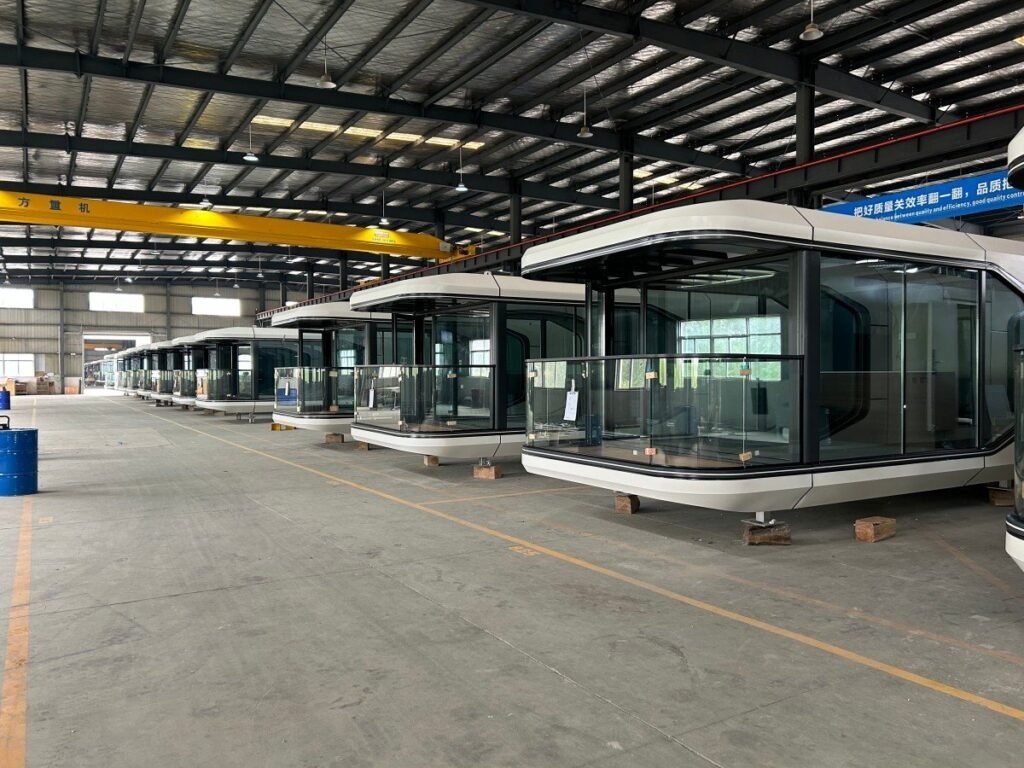
i) Unclear classification in local building codes
First, the legal classification creates confusion. Many local building codes do not have a clear definition of space capsule houses. This makes it difficult for authorities to classify them. In some cases, they are considered permanent buildings. In other places, they are considered portable units.
As a result, the approval process becomes inconsistent. You may be asked for additional documents or technical reports. At the same time, different departments may give different instructions. This leads to delays and repeated inspections. Ultimately, both time and cost increase.
ii) Differences between temporary and permanent uses
Next, there is a difference in the nature of the use. Officials often argue whether capsule houses are temporary or permanent. If they are declared permanent, strict rules apply. These include the foundation, utility connections, and fire safety systems.
However, if a temporary permit is granted, the permit is for a limited period of time. As a result, you may have to renew or transfer the permit later. This makes long-term planning difficult. Furthermore, financing and insurance options are also limited. Therefore, these differences increase the risk for the project.
iii) Uneven approval times in different regions
Finally, approval times vary by region. In one place, approval may be obtained quickly. In another, it may take months. There is no standard method. Local policies and experience influence decisions. As delays increase, so do costs.
This also affects the project schedule. This makes it difficult to expand to multiple locations. Additional time and budget planning are always necessary.
3) Low Density and Land Efficiency
After regulatory and approval issues, you face challenges related to land use. Even if permitted, space capsule houses do not use land efficiently. Their layout limits how many units can be placed on a site.
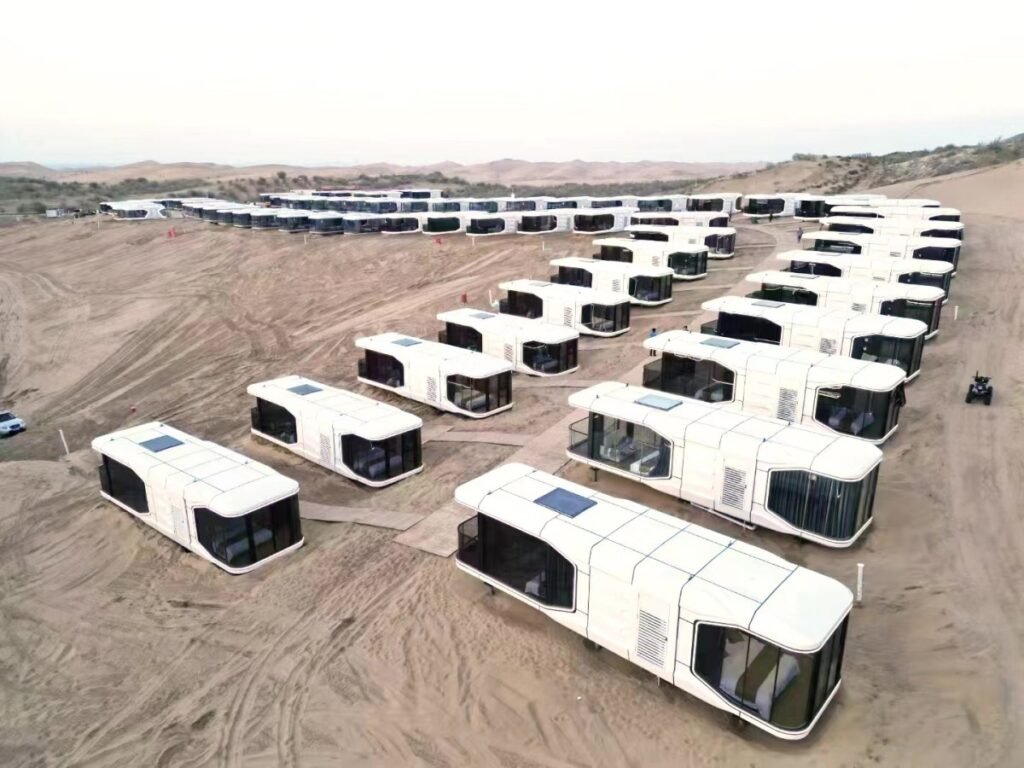
This directly impacts capacity, cost, and long-term profitability. That’s why land efficiency becomes a key issue.
i) Longer spacing: Space capsule house require longer spacing between units. You can’t place them too close together. This spacing is for accessibility, safety, and visual balance. However, this leaves a large portion of land unused. As a result, the overall plot efficiency decreases.
ii) Limited capacity per plot: Due to the low density, fewer units can be placed on each plot. You can’t expand in the same space. This limits the number of guests. Even larger plots don’t provide much capacity. Revenue potential is limited.
iii) Not suitable for urban areas: Land is limited and expensive in urban areas. Compact layouts are required. Capsule houses are not suitable for these conditions. Spacing rules conflict with urban zoning. This makes urban hospitality projects difficult.
iv) High land cost per guest: Low density increases the cost of land per guest. You pay for land that does not generate income. Each unit takes up more space. This increases operating costs and reduces profitability.
v) Limited design flexibility: A fixed layout does not allow for changes. You cannot improve the layout later. Paths and utilities limit the space. This makes it difficult to use the land efficiently.
4) Fixed Structural Design
After land use and layout limitations, structural constraints are the next big issue. Space capsule housings are built to a fixed design. This limits the possibilities for changing the unit over time. Both exterior and interior changes are strictly limited.
a) No changes allowed to the exterior structure
First of all, once production is complete, it is not possible to change. You can’t add walls, add windows, or change the shape. The unit is built as a completely closed structure.
That’s why all exterior decisions have to be made at the outset. If requirements change later, changes become either very expensive or completely impossible. As a result, long-term planning becomes difficult. Especially in hospitality projects, where guest expectations change over time.
b) Limited site adaptability
Furthermore, the fixed exterior design does not allow the unit to adapt to different locations. You cannot change the orientation to suit the views or the terrain. This prevents the unit from fitting well into different landscapes. Custom design possibilities are limited.
c) Limited flexibility in interior layout
Similarly, there is no flexibility in the interior layout. The interior design follows a pre-determined plan. Walls, plumbing, and wiring are fixed during production. This makes it difficult to remove walls or change the size of the space. Furniture arrangement is also limited. Storage spaces are also fixed. It is difficult to change the layout if the needs of the guests change.
d) Costs and risks of late design changes
In most cases, upgrades require partial demolition. This increases both cost and time. You have to accept the interior design of the unit as it is provided. This limits creative freedom and practical development.
Finally, late design changes pose serious risks. Once production begins, every change causes delays. Factories can also charge additional fees. The production schedule is affected. In some cases, the change is rejected altogether. Transportation and installation plans depend on the final measurements. Even the smallest change affects logistics. That’s why last-minute decisions can be risky. Every detail needs to be finalized well in advance.
5) Long-Term Maintenance Constraints
After the limitations of the fixed design, long-term maintenance becomes the next big issue. It is not easy to keep a space capsule house in good condition over time. Maintenance depends on specific materials and controlled systems.
As a result, repairs can be slow and expensive. The harshness of the weather also plays a significant role in long-term damage.

- a) Dependence on specific materials: First of all, special types of materials are used in space capsule houses. These materials are chosen for their light weight, strength, and beauty. However, they are not usually available in the local market. This makes it difficult to find alternatives.
- b) Difficulty in replacing exterior parts: In addition, the exterior panels and finishes are specially manufactured. If damaged, parts cannot be easily replaced. Common materials do not match the original design. Therefore, repairs require more time and planning.
- c) Factory-dependent spare parts: Furthermore, most spare parts have to be ordered directly from the factory. Local suppliers do not have compatible parts. As a result, maintenance becomes completely dependent on the manufacturer.
- d) Long repair times: Since parts come from the factory, repairs take a long time. Sometimes it can take weeks or even months. During this time, the units are no longer usable. This affects operations and revenue.
- e) Increasing maintenance costs over time: This is why long-term maintenance costs increase. Special parts and skilled craftsmen are expensive. Over time, these costs can become a financial burden.
- f) Rapid deterioration in harsh weather conditions: Finally, harsh weather conditions quickly deteriorate exterior surfaces. Strong sunlight, heavy rain, strong wind, or snow exacerbate the damage. This increases the need for repairs and the frequency of maintenance.
6) Limited Use Scenarios
After considering maintenance and long-term costs, the limitations of use become clear. Space capsule housing is not suitable for every business model. Their design and cost structure limit their use. Therefore, their use is limited to specific situations.
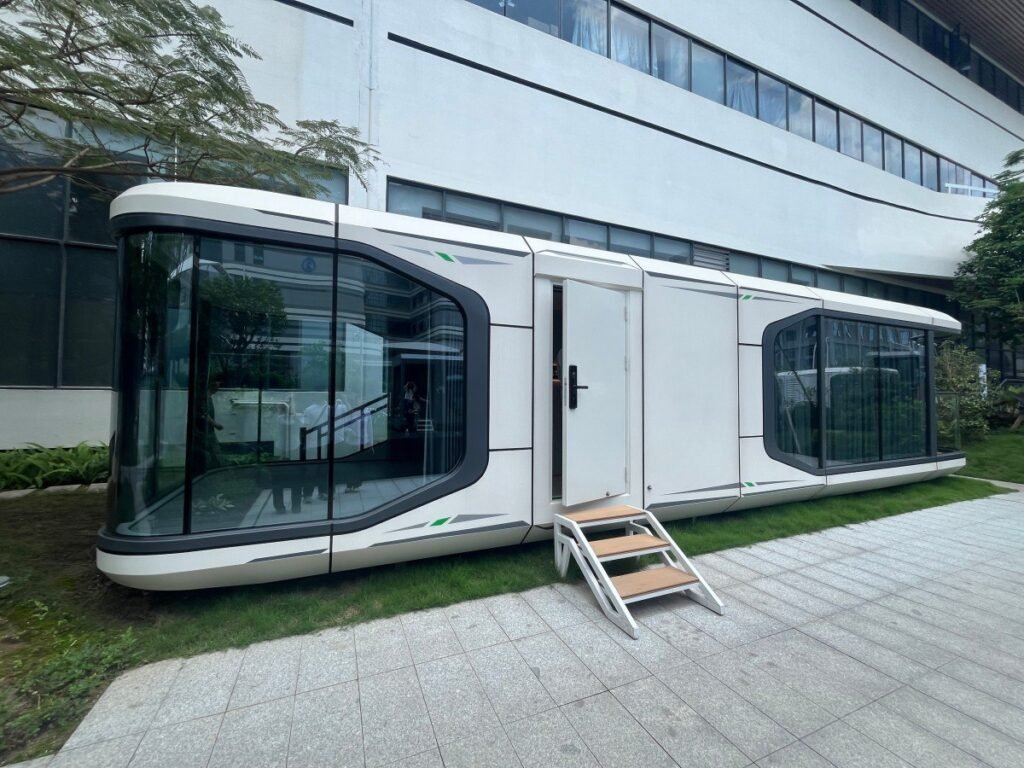
i) Not suitable for low-budget accommodation
Space capsule houses are not effective for low-budget accommodation. Their initial cost is high. Transportation and installation add additional costs. Maintenance also increases operating costs. Low-budget hotels rely on low construction costs and more rooms. Capsule houses do not support this model. It becomes difficult to recover the investment. Profitability is limited.
ii) Poor choice for large-scale standard hotels
Large hotel chains rely on uniform layouts. They require the same design in different locations. Space capsule houses have less flexibility. The need for fixed layouts and spacing reduces density. Expansion across different sites becomes difficult. It is also not easy to maintain uniformity. This limits their use in large hotel projects.
iii) Best for standout or premium units
Space capsule houses work best as premium units. They grab attention and provide a unique experience. Resorts use them as exclusive accommodations. Guests are willing to pay more for the unique design. Fewer units are also acceptable. The higher price helps cover the cost. That’s why capsule houses are more suitable for exclusive and high-end projects.
Conclusion
In short, the space capsule house looks modern and unique. However, they have clear limitations. Transportation and access can be difficult. Approvals can take time. Land use is not efficient. Design changes are limited. Maintenance costs increase over time. Usage opportunities are also limited. Careful planning is essential before investing.
At Glamni, we help you understand these limitations. We provide guidance in design, approvals, and site planning. Our team helps you choose the right solution according to your goals, budget, and long-term plans.