Skip to content


Do you want a unique place to live or host guests? Ooh yes! But choosing between a capsule house and an RV can feel tricky. Don’t worry! Both options give you freedom, comfort, and flexibility, but in very different ways.
Moreover, in this guide, you will learn the key differences between a Capsule house and an RV. Hence, you will know which choice truly fits your lifestyle or project.
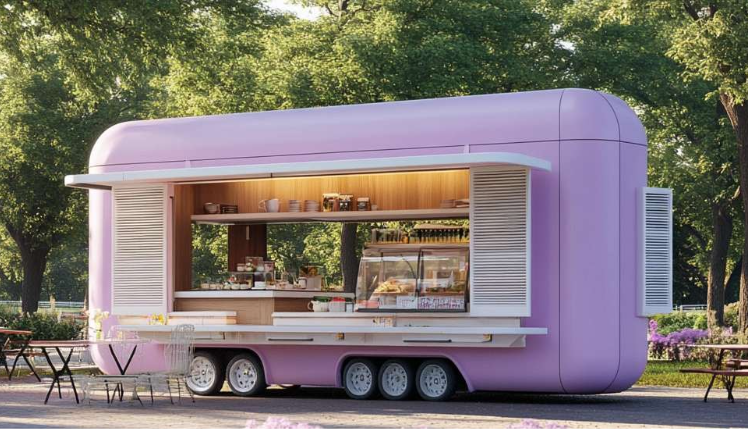
1) What each option is
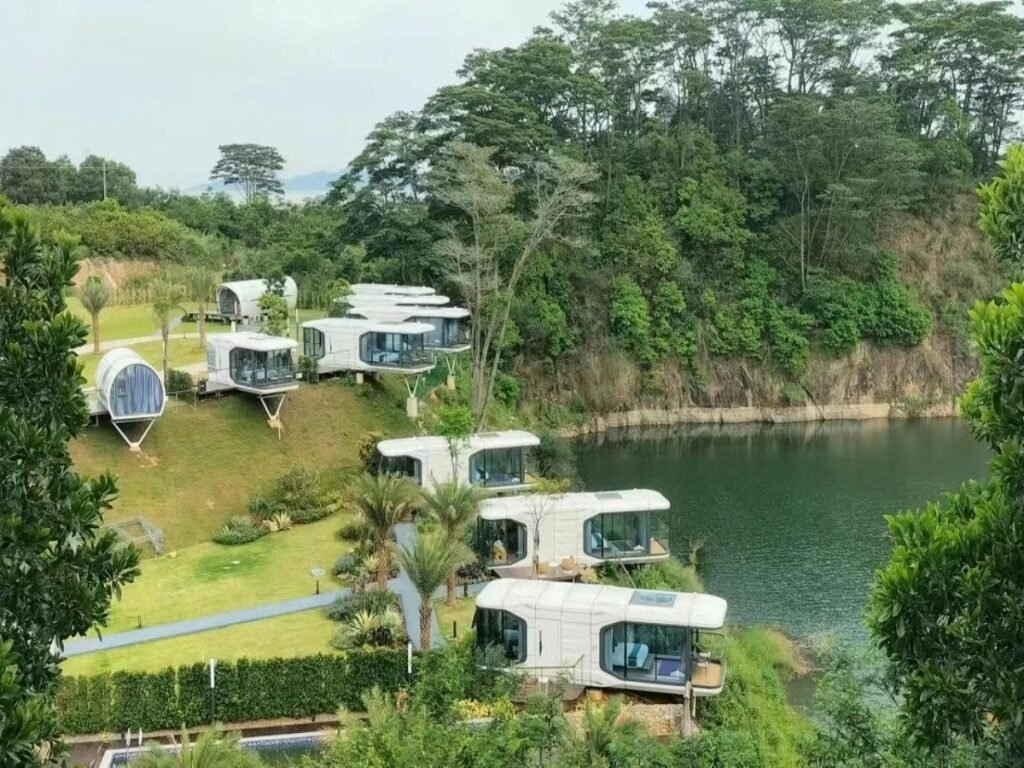
i) Capsule house: First of all, the capsule house is built in a controlled factory environment. Moreover, it is delivered as a prefabricated module. Therefore, it is then placed on piers or a slab foundation. Furthermore, it is tested like a cabin or a small house.
However, capsule houses are becoming very popular for tourism in Japan and China. So there are over 400 capsule hotels in Japan today. Hence, this shows how common they have become as permanent residents.
ii) RV: On the other hand, an RV or park-model RV is a mobile home. Moreover, it is built according to the standards of the Recreational Vehicle Industry Association (RVIA). Therefore, it is used for temporary or seasonal housing.
For example, in 2022, 11.2 million households in the United States owned an RV (according to RVIA data). And also, your RVs are lighter and more mobile. So you can move them from one place to another by towing or driving them without a crane.
2) Where can you place them
As you learn about what each option is? Now you will learn about where you can place them.
i) Capsule house: Next, a capsule house is considered a small cabin or tiny home. So you have to follow local building codes and zoning laws. Moreover, you have to get permits, inspections, and approvals. For example, in Australia and the United States, capsule houses are checked just like small lodges or cabins. Hence, you can use them on residential land, resorts, or vacation plots.
ii) RV: On the other hand, an RV is different. Moreover, you can only park it where RV use is legally permitted. So your RV parks, campsites, or designated plots. But many areas don’t allow long stays. For example, in most RV parks in the US, you can only stay for 14 to 30 days, after which you have to move on.
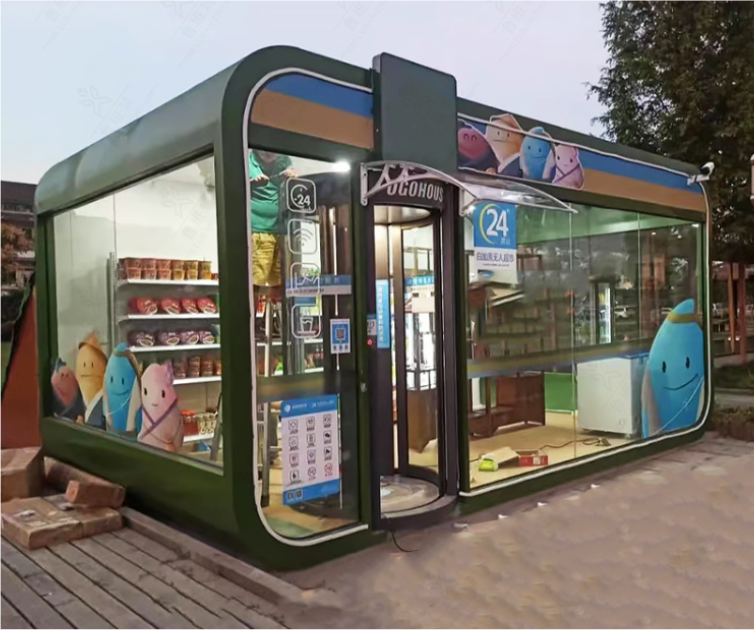
3) Interior comfort and durability
As you learn about where you can place them. Moreover, now you will learn about the Interior comfort and durability of both houses.
i) Capsule house: Then, inside the capsule house, you get more comfort and strength. Moreover, its walls are thicker. So they reduce noise. Therefore, the interior design is more standardized and uniform. Because of this, you get the same comfort in every season. Hence, it maintains its quality for a long time.
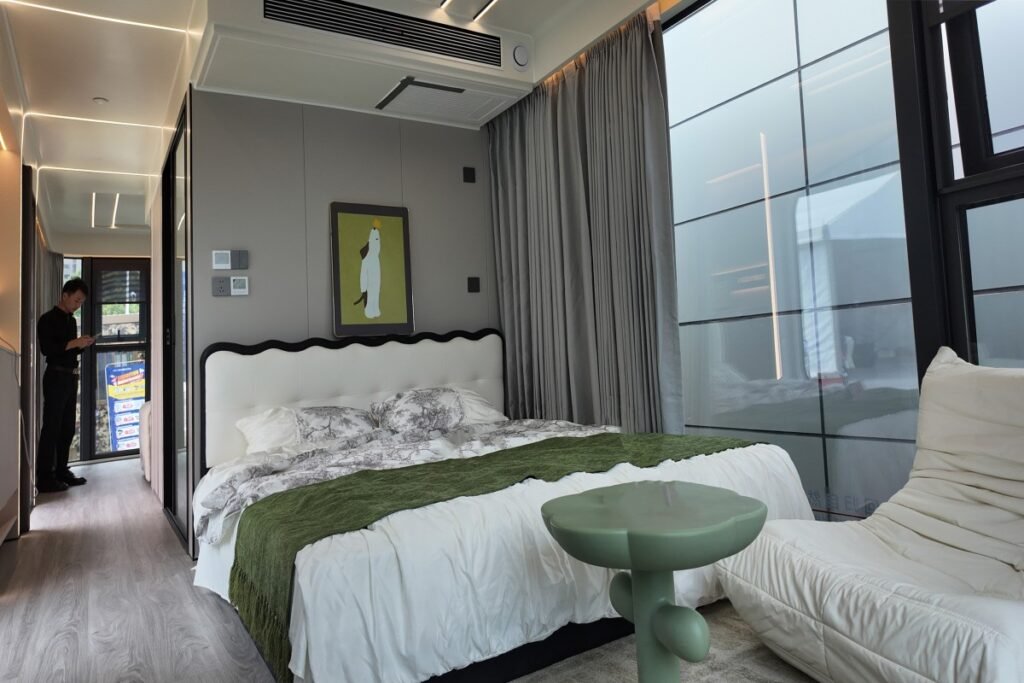
ii) RV: On the other hand, an RV is built with lightweight construction. So it can be easily transported. But that means interior comfort varies depending on the model and the season. Therefore, it can be too hot in the summer and too cold in the winter. And also, its strength can decrease over time.
4) Utilities, winter use, and ventilation
As you learn about the Interior comfort and durability of both houses. Moreover, now you will discuss Utilities, winter use, and ventilation.
i) Capsule house: After that, a capsule house has paved water lines and hard-wired electricity. This means that your amenities are permanent, just like a regular house. Moreover, you can easily add better insulation, ventilation, and humidity control. Hence, this house is comfortable in all seasons.
Therefore, you get a consistent temperature, good air circulation, and protection from humidity. So it’s perfect for year-round use.
ii) RV: On the other hand, RVs use tanks and RV hookups for water. Moreover, electricity usually comes from external connections or onboard systems. Therefore, these are temporary facilities, and insulation and ventilation are limited.
Furthermore, the performance of an RV in all four seasons depends on the specific model. So some RVs can handle both winter and summer. But most are built for mid-season or seasonal use.
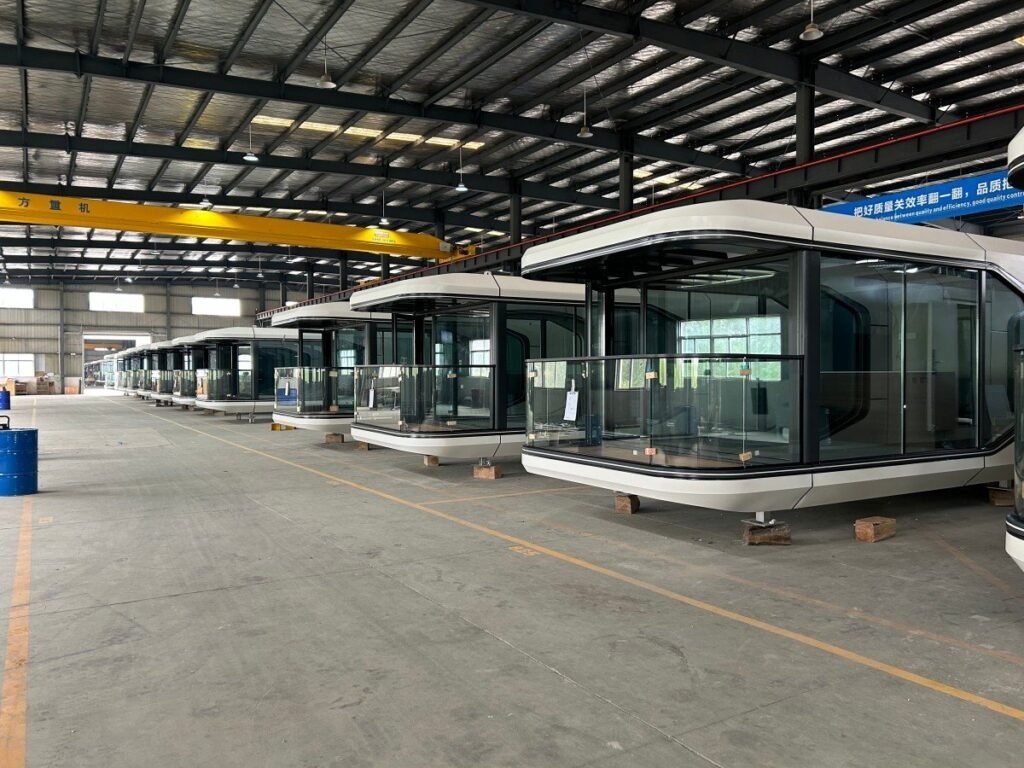
5) Set up and approvals on site
As you learn about Utilities, winter use, and ventilation. Moreover, now you will learn about the setup and approvals on-site.
i) Capsule house: Moreover, a capsule house requires foundations. Therefore, it also requires connections for water, electricity, and other utilities. Furthermore, it is ready for use only after everything has been inspected.
Typically, it takes 2 to 5 days to transport and set up a capsule house from the factory to the site. However, it provided the foundation is ready in advance. For example, small resort or cabin modules in Japan and Europe take about the same time.
ii) RV: On the other hand, RVs can be parked immediately wherever legally permitted. Moreover, their anchoring and connections are easy. Therefore, in most RV parks, an RV can be set up in just 1 to 2 hours. So you can have it ready for use immediately without any major construction or foundation.
6) Mobility and logistics
As you learn about the setup and approvals on-site at the capsule house and RV. Moreover, now you will learn about the mobility and logistics of both.
i) Capsule house: Therefore, the capsule house is usually delivered to the site from the factory as an oversized load. And also, it is then placed on the foundation with the help of a crane. Once set, it usually remains in a permanent location.
For example, in Europe, capsule modules often remain in the same location for 10 years or more.
ii) RV: On the other hand, RVs are often designed to be moved back and forth. Moreover, you can tow or drive them to another location, depending on the weather. So this doesn’t require a crane or heavy machinery.
For example, in the United States, more than 12 million RV owners move their RVs to different locations several times a year.
7) Insurance and financing paths
As you learn about the mobility and logistics of both. Moreover, now you will learn about Insurance and financing paths.
i) Capsule house: Also, a capsule house is usually insured like a permanent building. Moreover, this may include property insurance and commercial liability, especially if you host guests. So you protect both your capital and your guests.
Furthermore, banks or financial institutions often provide residential or commercial loans for a capsule house. Hence, it is considered permanent and legal property.
ii) RV: On the other hand, RVs are covered under a separate insurance policy, such as an RV or park model policy. Moreover, this insurance is different from general building insurance. Therefore, your RVs often require special RV financing to borrow, and the repayment schedule is short or specific.
However, in the United States, about 30% of RV owners used special RV financing.
8) Cost over time and value
i) Capsule house: At last, a capsule house initially costs more for site work and foundation. However, once installed, it offers consistent quality and longevity. Therefore, the price of a capsule house gradually decreases over time, as it resides on legally approved land and remains in good condition. So in Japan, capsule houses retain about 70% of their original value even after 10 years.
ii) RV: On the other hand, an RV has a lower initial cost, and you can start using it immediately. However, the resale value of an RV usually decreases quickly. Moreover, in the United States, most RVs lose 40% or more of their original value in 3 to 5 years. So this is due to temporary or seasonal use.
9) How to Choose between a Capsule House and an RV
As you learn about the difference between the two houses. Moreover, now you will learn how to choose between a Capsule House and an RV.
→ When to Choose a Capsule House
- First of all, if you want your home to feel permanent and resort-like, choose a capsule house. For example, there are over 400 capsule hotels in Japan. Moreover, it shows the demand for small, permanent living units.
- Next, if you want a quiet room and easy housekeeping. Moreover, the walls of a capsule house are usually thick and standard. So it provides better comfort than an RV.
- Then, if you want it to comply with building codes and be comfortable even in winter. So many capsule houses in Europe have a constant temperature all year round.
- After that, if you want to save capital for the long term. Moreover, a capsule house retains 70% of its value even after 10 years. Hence, the value of an RV decreases rapidly.
→ When to Choose an RV
- First of all, if you want a seasonal or mobile home, choose an RV. Moreover, more than 11 million households in the United States own an RV, demonstrating its popularity as a flexible living space.
- Next, when you want it to be set up quickly and easily. So most RVs can be set up and ready for use in 1–2 hours, with no foundation required.
- Then, if you have a tight budget or a temporary project. Moreover, the initial cost of an RV is lower than a capsule house.
- After that, you want to be able to change the weather or location without having to move a crane. Moreover, many RV owners tow or drive their unit several times a year. So this is perfect for temporary housing.
Conclusion
In short, the main difference between a capsule home and an RV is that a capsule house is more permanent, durable, and comfortable for all seasons. On the other hand, an RV is cheaper, more immediate, and better for mobile living.
Moreover, if you want your investment to be safe and provide long-term benefits. Then choose a capsule house. Therefore, if you want seasonal or mobile living, then an RV is better. Furthermore, at Glamni, we provide you with the best accommodation and guidance. So it is easy for you to make the right choice.