Skip to content


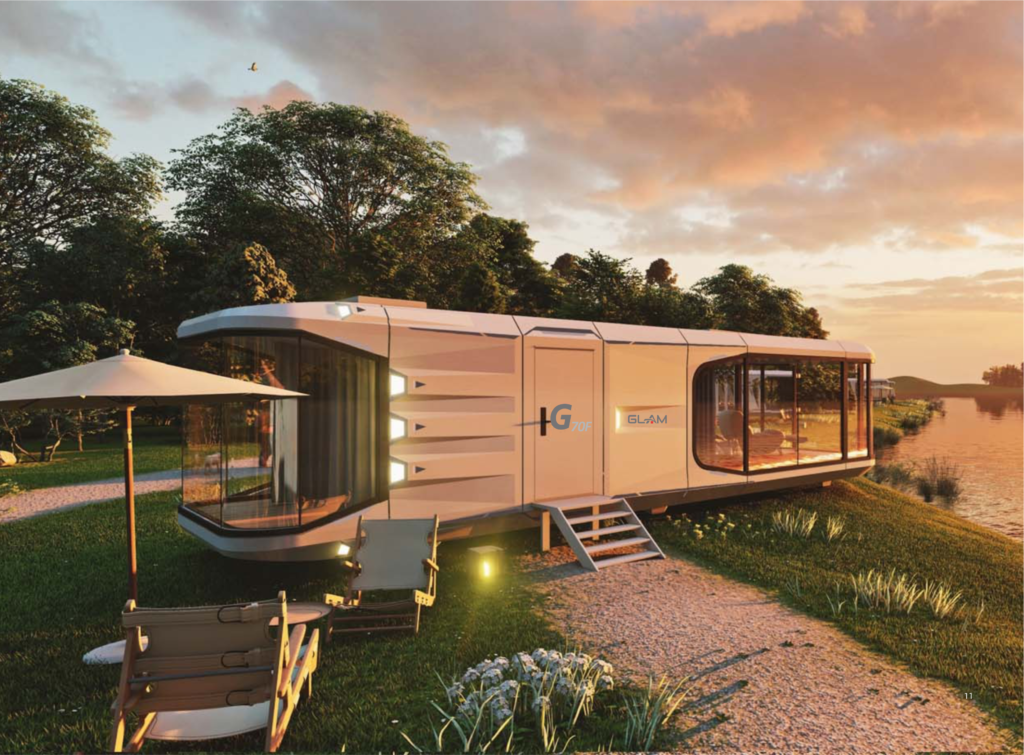
Do you want to know how big a capsule home can really be? Ooh yes! Choosing the right size can feel tricky. Don’t worry! Each dimension(width, height, and length) affects comfort, transport, and permits.
Most single module capsule houses measure 9–12 m long, 3.2–3.4 m wide, and 3.2–3.4 m high. Permit friendly width is ≤2.55 m in the EU and Australia and about 2.59 m in the United States. Pick ≤2.55–2.59 m for easier transport and permits. Pick 3.2–3.4 m for better interior comfort.
In this article, you will learn typical sizes of capsule houses, weight, country-specific rules, and planning steps. Hence, you will know exactly how to pick the perfect capsule house size for your site and needs.

1) How big can a capsule house be
First of all, a capsule house is a small, factory-built living unit. Moreover, it is designed for quick installation and easy transport. Therefore, despite its small size, it matters a lot. And also, the actual size of a capsule house is not arbitrary.
Furthermore, it depends on the interior comfort and road traffic regulations. However, in most cases, width is the biggest limiting factor, as special permits may be required for units with larger widths. So when you plan. Then you consider three important numbers that you need to determine at the beginning:
- Width: First of all, it affects ease of transportation on the road and internal movement.
- Height: Next, it affects bridge clearance, lifting for cranes, and sometimes permits.
- Length: Then, it affects turning on the site and handling during transport.
Hence, you choose these numbers carefully to ensure that your capsule house is comfortable, compliant, and easy to install. So you picking them in advance prevents costly changes. And also keeps your project on schedule.
2) What size is a capsule house
As you learn about how big a capsule house can be. Moreover, now you will learn the size of the capsule house.
→ Typical Market Sizes
First of all, most capsule houses today fall into a standard market range.
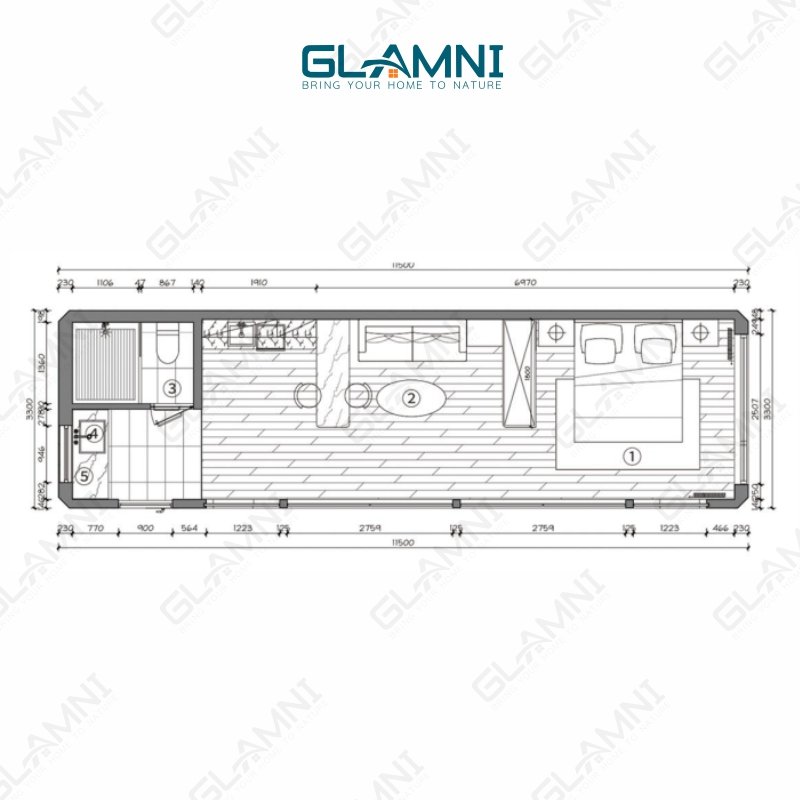
- Length: ~9–12 meters (30–39 ft)
- Width: ~3.2–3.4 meters (10.5–11 ft)
- Height: ~3.2–3.4 meters (10.5–11 ft)
Moreover, this size provides comfortable accommodation. And also, it is still transportable.
Therefore, their compact versions are great for smaller sizes, especially for urban or confined spaces. But they may have limited storage and walking space.
→ Permit-Friendly Options
Next, if you want easy transportation and clearance, these sizes are available in many designs:
- Width: ≤2.5–2.55 meters (8.2–8.4 ft)
- Length: ~8–10 meters (26–33 ft)
Moreover, these units fit within road and permit limits in many countries. Therefore, the interior space is a bit smaller. But they are easy to transport, inexpensive, and easy to obtain local permits for.
→ Practical Tip for Drawings
So you always include both metric and imperial systems in your drawings. Hence, this can help avoid confusion and errors, especially when moving or installing units. Therefore, many problems arise when contractors or carriers read the wrong units. Therefore, checking both systems saves both time and money.
3) How much does a capsule house weigh?
As you learn about the size of the capsule house. Moreover, now you will learn about the weight of your capsule house.
→ Typical Weight Range
First of all, a capsule house typically weighs several tons. And also larger units can reach 10–20 tons. So the weight depends on:
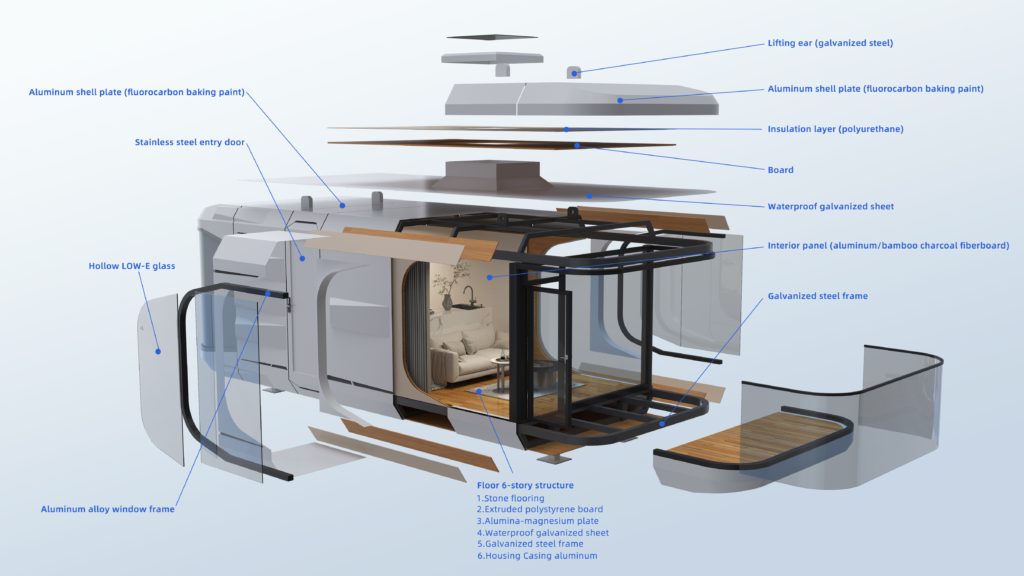
- Shelf Material: Steel, Aluminum, or Composite Panels
- Windows/Glazing: Size and Type of Windows
- HVAC Systems: Heating, Ventilation, and Air Conditioning
- Interior Finishes: Floor, Wall, and Ceiling Preparation

→ Why Weight Matters
Next, the weight of a capsule house can affect several things:
- Crane size: A Larger crane is required for heavier units
- Sling angles: Lifting at the correct angle required
- Outrigger pads: Weight-appropriate pads to keep the crane stable
- Permit class: Special permits are required for heavier units in some areas
→ Planning with Weight
So keep track of the weight for each option pack, for example:
- Underfloor heating system
- Larger windows
- Additional insulation
Hence, this helps you plan lifting and installation correctly and safely.
4) Country-specific regulations
As you learn about the weight of your capsule house. Moreover, now you will learn about width, height, and length limits in different regions. Therefore, these rules affect permits, transport, and installation. So each country has its own rules and regulations regarding where and how a capsule house can be moved or installed.
→ Laws of the United States for Capsule House
- First of all, the maximum width without a permit is approximately 8.5 feet (2.59 meters).
- Next, units larger than this require an oversize permit.
- Then, special travel times or escort vehicles may be required for oversized transport.
→ Laws of the European Union for Capsule House
- First of all, the width without a permit is approximately 2.55 meters.
- Next, for units larger than this, a special permit is required.
- The height and length limits may vary slightly from country to country.
→ Laws of Australia for Capsule House
- First of all, the width without a permit is approximately 2.50 meters.
- Next, the height limit is generally ≤4.3 meters.
- Then a permit and route plan are required for oversize units.
So if your capsule house is approximately 3.2–3.4 meters wide. You expect an oversize permit in most areas. Therefore, knowing the rules in advance helps you plan for transport, crane lifting, and on-site installation.
5) Height and length basics
As you learn about the country-specific regulations. Moreover, now you will learn about height and length. Therefore, these sizes affect transport, turning on roads, and placement on site. So the height is generally safe to keep the overall height of a capsule house between 4.1–4.3 meters.
However, this is necessary to protect against bridges, cables, and other overhead obstructions. On the other hand, the Capsule houses are typically 9–12 meters long. Moreover, this length is convenient for transport and better for turning and setting up on site. Therefore, often a length of 11–11.5 meters is considered the most suitable.
So you check the trailer type and turning radius in advance for narrow roads or confined spaces. Hence, this can help avoid problems with your transportation and installation.
6) Comfort versus transport
As you learn about the height and length of the capsule house. Moreover, now you will learn about the trade-offs between easier road moves and interior comfort.

- is ≤2.55 meters. Then it is easy to move on the road. But it has limited internal movement. Then the bathrooms are small, and storage is shallow.
- Wider Width for Comfort: Next, if the width is about 3.2–3.4 meters. Then the oversize transport will be required. But this improves the interior comfort, such as:
- Separate bedroom doors
- Large shower
- Real sofa
- Small desk
7) Transport planning steps
As you learn about the trade-offs between easier road moves and interior comfort. Moreover, now you will learn about the steps to ensure safe, efficient, and permitted delivery to your site.
i) Confirm Route Limits: First of all, you should check the route thoroughly before moving the capsule house. Then find out the width, height, and weight limits of roads and bridges. And also, you check for bridges, tunnels, and overhead wires. So, obtain permits for oversize loads if necessary.
ii) Book Permits and Services: Next, obtain permits for oversized transport in advance. Moreover, arrange for escort vehicles according to local regulations. Therefore, book the hauler, crane, and set-up team on the same schedule to avoid delays.
iii) Plan for Weather and Delays: Then, you check the weather for the days of transport. Moreover, allow extra days for rain, wind, or other reasons. So you make sure your team and equipment are prepared for any changes.
iv) Coordinate Site Access: After that, Reserve level crane pads so that the module can be lifted. Moreover, clear the installation area and check the turning space for the truck. Therefore, the lifting points, crane radius, and outrigger pads must be suitable for the weight of the module.
v) Verify Foundation Alignment: At last, you make sure the foundation level and anchor locations match the module interfaces. Moreover, have all utility connections ready for installation.
8) Site access and lifting basics
As you learn about the steps to ensure safe, efficient, and permitted delivery to your site. Moreover, now you will learn about crane pads, clear set areas, turning radii, and lifting coordination to make the installation smooth and secure.
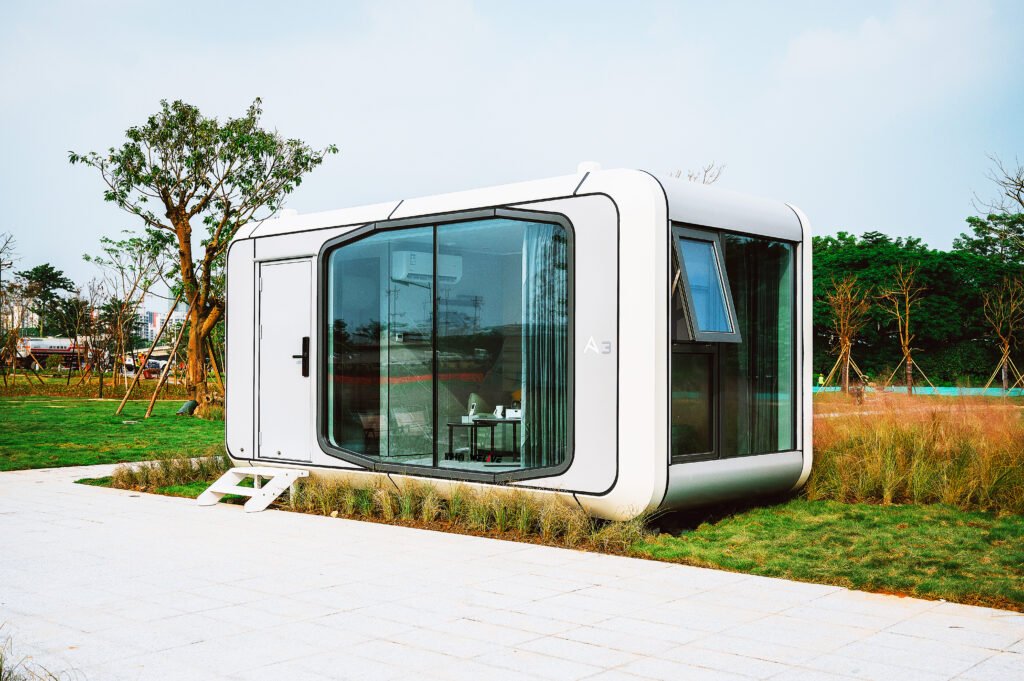
Therefore, prepare the site thoroughly before installing the capsule house. So you reserve a flat and stable crane pad and remove all obstacles from the installation area. Furthermore, you check the turning radius for trucks and cranes, especially on narrow paths.
Hence, the lifting points, sling angles, crane radius, and outrigger pads should be suitable for the weight of the module. Finally, match the foundation level and anchor points to the module. And also, you have all utility connections ready for installation. so that the work can be completed safely and without any obstacles.
Conclusion
In short, knowing the height, length, width, weight, and site requirements of your capsule house is crucial for safe transportation and installation. Moreover, planning can help avoid delays and accidents.
Therefore, balancing comfort and transportation constraints helps you make the best decision. Furthermore, we at Glamni provide you with guidance and support to ensure your capsule house installation is safe, easy, and compliant.